Hanuman Chalisa: Full English Lyrics with Meaning (All 40 Verses)
The Hanuman Chalisa is the complete guide to Lord Hanuman on this page – all 40 verses (chaupais) in English transliteration and with their English meanings, preceded by the two opening couplets (dohas) and followed by the closing couplet. This is the full, unabridged text as composed by Tulsidas in the 16th century, a public-domain ancient devotional composition that has been recited by millions across centuries.
Source: Composed by the poet-saint Tulsidas (~1575 CE) in the Awadhi dialect of Hindi. The Hanuman Chalisa is part of the Vinaya Patrika tradition and is among the most widely recited devotional texts in the Hindu tradition. Text here follows the standard canonical recension.
Opening Dohas (Invocations)
Doha 1
श्रीगुरु चरन सरोज रज निज मन मुकुर सुधारि।
बरनउँ रघुबर बिमल जसु जो दायकु फल चारि॥Shri Guru charan saroj raj nija mana mukura sudhari |
Baranau Raghubar bimala jasu jo dayaka phala chari ||Meaning: Cleansing the mirror of my mind with the dust of my Guru’s lotus feet, I now narrate the pure glory of Raghuveer (Lord Ram), which grants the four fruits of life (dharma, artha, kama, moksha).
Doha 2
बुद्धिहीन तनु जानिके सुमिरौं पवन-कुमार।
बल बुद्धि विद्या देहु मोहि हरहु कलेस विकार॥Buddhiheen tanu janike sumiron Pavana-Kumar |
Bala buddhi vidya dehu mohi harahu kalesa vikara ||Meaning: Knowing myself to be ignorant and destitute, I meditate on you, O Son of the Wind. Grant me strength, wisdom and knowledge; remove my suffering and impurities.
The 40 Chaupais
Chaupai 1
जय हनुमान ज्ञान गुन सागर। जय कपीस तिहुँ लोक उजागर॥
Jay Hanumana jnana guna sagara | Jay Kapisa tihun loka ujagara ||
Meaning: Victory to Hanuman, ocean of wisdom and virtue. Victory to the Lord of Monkeys, illuminator of the three worlds.
Chaupai 2
राम दूत अतुलित बल धामा। अंजनि-पुत्र पवनसुत नामा॥
Rama duta atulita bala dhama | Anjani-putra Pavanasuta nama ||
Meaning: Messenger of Ram, abode of incomparable strength. Son of Anjani, known as the Son of the Wind.
Chaupai 3
महावीर विक्रम बजरंगी। कुमति निवार सुमति के संगी॥
Mahavira vikrama Bajrangi | Kumati nivara sumati ke sangi ||
Meaning: The great hero, of the mighty thunder-body. Remover of evil intellect, companion of the righteous.
Chaupai 4
कंचन बरन बिराज सुबेसा। कानन कुण्डल कुंचित केसा॥
Kanchana barana biraja subesa | Kanana kundala kunchita kesa ||
Meaning: Golden-complexioned, splendidly attired. Ear-rings adorning his ears, curly locks of hair.
Chaupai 5
हाथ बज्र और ध्वजा बिराजै। काँधे मूँज जनेऊ साजै॥
Hatha bajra aura dhvaja birajain | Kandhe moonja janeoo sajain ||
Meaning: In his hands shine the thunderbolt and a flag. On his shoulder the sacred thread (janeu) of munja grass adorns him.
Chaupai 6
शंकर सुवन केसरी नंदन। तेज प्रताप महा जग वंदन॥
Shankara suvana Kesari nandana | Teja pratapa maha jaga vandana ||
Meaning: Son of Shiva (Shankara), son of Kesari (his earthly father). Of great splendor and glory, worshipped throughout the world.
Chaupai 7
विद्यावान गुनी अति चातुर। राम काज करिबे को आतुर॥
Vidyavana guni ati chatura | Rama kaja karibe ko atura ||
Meaning: Scholarly, virtuous and supremely skilled. Ever eager to accomplish Ram’s work.
Chaupai 8
प्रभु चरित्र सुनिबे को रसिया। राम लखन सीता मन बसिया॥
Prabhu charitra sunibe ko rasiya | Rama Lakhana Sita mana basiya ||
Meaning: He delights in hearing the Lord’s stories. Ram, Laxman and Sita dwell permanently in his heart.
Chaupai 9
सूक्ष्म रूप धरि सियहिं दिखावा। विकट रूप धरि लंक जरावा॥
Sukshma rupa dhari siyahin dikhava | Vikata rupa dhari Lanka jarava ||
Meaning: Taking a subtle (tiny) form, he appeared before Sita in Lanka. Taking a terrible form, he burned Lanka to ashes.
Chaupai 10
भीम रूप धरि असुर संहारे। रामचंद्र के काज सँवारे॥
Bhima rupa dhari asura samhare | Ramachandra ke kaja savare ||
Meaning: Taking a massive, fearsome form, he destroyed the demons. He beautifully accomplished all the tasks of Ramachandra.
Chaupai 11
लाय सजीवन लखन जियाये। श्रीरघुबीर हरषि उर लाए॥
Laya sajivana Lakhana jiyaye | Shri Raghubira harashi ura lae ||
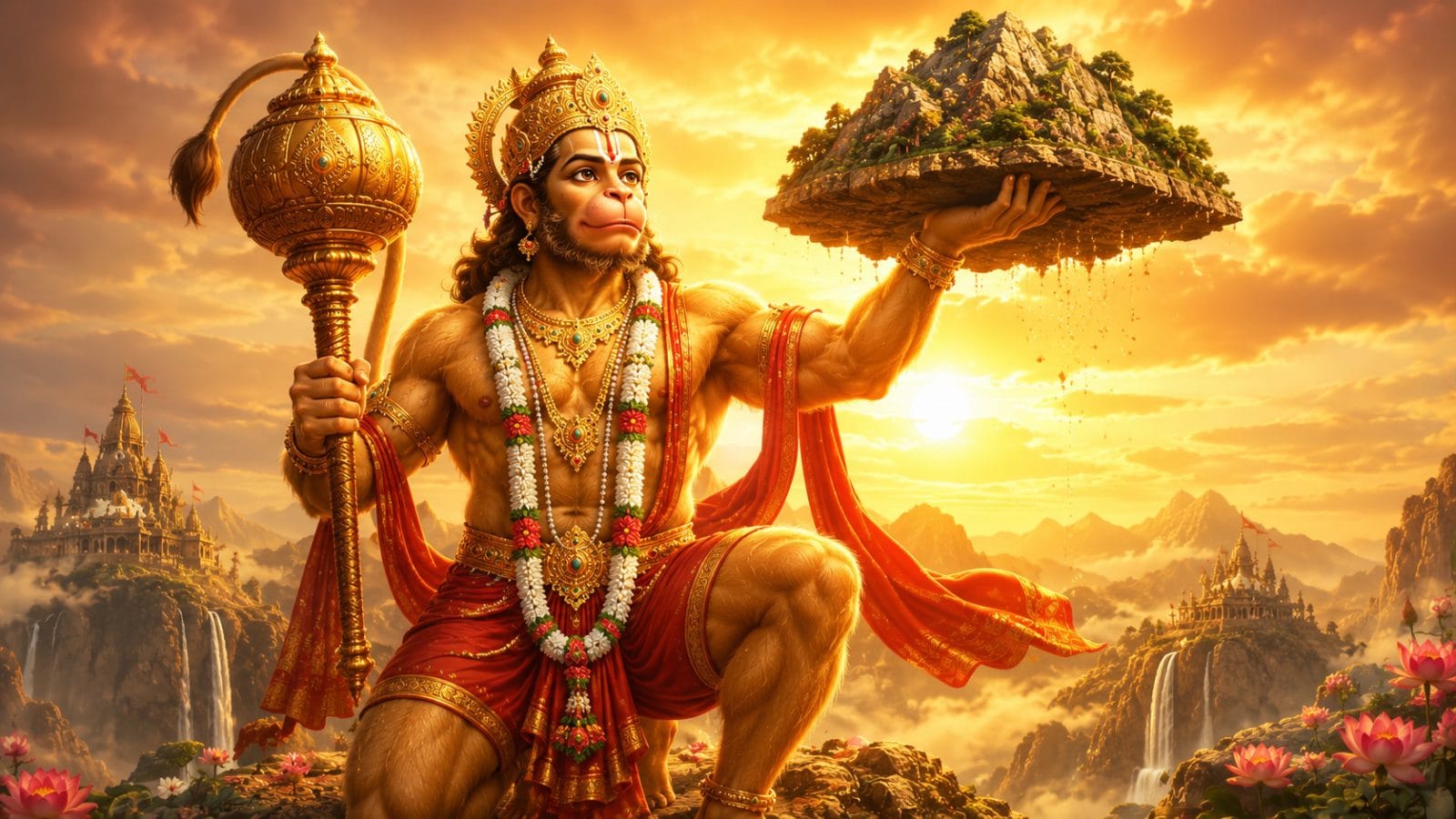
Meaning: Bringing the Sanjeevani herb, he revived Laxman. Sri Raghuveer (Ram) joyfully embraced him to his heart.
Chaupai 12
रघुपति कीन्ही बहुत बड़ाई। तुम मम प्रिय भरतहि सम भाई॥
Raghupati kinhi bahuta badai | Tuma mama priya Bharatahi sama bhai ||
Meaning: Raghupati (Ram) praised him greatly: “You are as dear to me as my brother Bharat.”
Chaupai 13
सहस बदन तुम्हारो जस गावैं। अस कहि श्रीपति कंठ लगावैं॥
Sahasa badana tumharo jasa gavahin | Asa kahi Shripati kantha lagavahin ||
Meaning: Thousands of mouths sing your glory. Saying this, Sripati (Vishnu/Ram) embraced Hanuman.
Chaupai 14
सनकादिक ब्रह्मादि मुनीसा। नारद सारद सहित अहीसा॥
Sanakadika Brahmadi munisa | Narada Sharada sahita Ahisa ||
Meaning: Sages like Sanaka, Brahma and other great seers. Narada, Sharada (Saraswati), and Shesha (the divine serpent) – all sing his glory.
Chaupai 15
जम कुबेर दिगपाल जहाँ ते। कवि कोविद कहि सके कहाँ ते॥
Yama Kubera digapala jahan te | Kavi kovida kahi sake kahan te ||
Meaning: Yama (god of death), Kubera (god of wealth) and the guardians of all eight directions – where can poets and scholars fully describe your glory?
Chaupai 16
तुम उपकार सुग्रीवहिं कीन्हा। राम मिलाय राज पद दीन्हा॥
Tuma upakara Sugrivahi kinha | Rama milaya raja pada dinha ||
Meaning: You did a great favor to Sugriva. By uniting him with Ram and restoring his kingdom.
Chaupai 17
तुम्हरो मंत्र विभीषण माना। लंकेश्वर भए सब जग जाना॥
Tumharo mantra Vibhishana mana | Lankeshvara bhae saba jaga jana ||
Meaning: Vibhishana accepted your counsel. He became the Lord of Lanka – this the whole world knows.
Chaupai 18
जुग सहस्त्र जोजन पर भानू। लील्यो ताहि मधुर फल जानू॥
Juga sahasra jojana para bhanu | Lilyo tahi madhura phala janu ||
Meaning: The sun, thousands of leagues away across ages. You swallowed it as a child, mistaking it for a sweet fruit.
Chaupai 19
प्रभु मुद्रिका मेलि मुख माहीं। जलधि लाँघि गये अचरज नाहीं॥
Prabhu mudrika meli mukha mahin | Jaladhi langhi gaye acharja nahin ||
Meaning: Holding the Lord’s ring in your mouth. You leaped across the ocean – no wonder!
Chaupai 20
दुर्गम काज जगत के जेते। सुगम अनुग्रह तुम्हरे तेते॥
Durgama kaja jagata ke jete | Sugama anugraha tumhare tete ||
Meaning: All the difficult tasks in the world. Become easy through your grace.
Chaupai 21
राम दुआरे तुम रखवारे। होत न आज्ञा बिनु पैसारे॥
Rama duare tuma rakhavare | Hota na ajna binu paisare ||
Meaning: You are the guardian at Ram’s door. None may enter without your permission.
Chaupai 22
सब सुख लहै तुम्हारी शरना। तुम रक्षक काहू को डरना॥
Saba sukha lahai tumhari sharana | Tuma rakshaka kahu ko darana ||
Meaning: One who takes your refuge gains all happiness. With you as protector, there is nothing to fear.
Chaupai 23
आपन तेज सम्हारो आपै। तीनों लोक हाँक तें काँपै॥
Apana teja samharo apain | Tinon loka hanka ten kanpain ||
Meaning: You alone can contain your own radiance. The three worlds tremble at your mighty roar.
Chaupai 24
भूत पिशाच निकट नहिं आवै। महाबीर जब नाम सुनावै॥
Bhuta pishaca nikata nahin avain | Mahavira jaba nama sunavain ||
Meaning: Evil spirits and ghosts cannot come near. When the name of the great hero Hanuman is uttered.
Chaupai 25
नासै रोग हरै सब पीरा। जपत निरंतर हनुमत बीरा॥
Nasain roga harain saba pira | Japata nirantara Hanumat vira ||
Meaning: All diseases are destroyed and all pains removed. By continuously chanting the name of brave Hanuman. (Keeping Devta App’s jap counter running lets you build this continuous practice effortlessly.)
Chaupai 26
संकट से हनुमान छुड़ावै। मन क्रम बचन ध्यान जो लावै॥
Sankata se Hanumana chhudavain | Mana krama bachana dhyana jo lavain ||
Meaning: Hanuman frees one from troubles. For those who focus on him in thought, deed and word.
Chaupai 27
सब पर राम तपस्वी राजा। तिन के काज सकल तुम साजा॥
Saba para Rama tapasvi raja | Tina ke kaja sakala tuma saja ||
Meaning: Ram the ascetic-king reigns over all. You accomplish all his tasks to perfection.
Chaupai 28
और मनोरथ जो कोई लावै। सोई अमित जीवन फल पावै॥
Aura manoratha jo koi lavain | Soi amita jivana phala pavain ||
Meaning: Whatever wish anyone brings to you. They receive immeasurable fruit and fulfilment in life.
Chaupai 29
चारों जुग परताप तुम्हारा। है परसिद्ध जगत उजियारा॥
Charon juga paratapa tumhara | Hai parasiddha jagata ujiyara ||
Meaning: In all four ages your glory shines. You are renowned as the illuminator of the world.
Chaupai 30
साधु संत के तुम रखवारे। असुर निकंदन राम दुलारे॥
Sadhu santa ke tuma rakhavare | Asura nikandana Rama dulare ||
Meaning: You are the guardian and protector of saints and sages. Destroyer of demons, the beloved of Ram.
Chaupai 31
अष्ट सिद्धि नव निधि के दाता। अस बर दीन्ह जानकी माता॥
Ashta siddhi nava nidhi ke data | Asa bara dinh Janaki Mata ||
Meaning: Granter of the eight spiritual perfections (siddhis) and nine divine treasures (nidhis). Such was the boon bestowed upon you by Mother Janaki (Sita).
Chaupai 32
राम रसायन तुम्हरे पासा। सदा रहो रघुपति के दासा॥
Rama rasayana tumhare pasa | Sada raho Raghupati ke dasa ||
Meaning: You possess the elixir (nectar) of Ram’s name. Ever remain a devoted servant of Raghupati (Ram).
Chaupai 33
तुम्हरे भजन राम को पावै। जनम जनम के दुख बिसरावै॥
Tumhare bhajana Rama ko pavain | Janama janama ke dukha bisaravain ||
Meaning: Through devotion to you, one attains Ram. The sorrows accumulated over many births are forgotten.
Chaupai 34
अंत काल रघुबर पुर जाई। जहाँ जन्म हरि-भक्त कहाई॥
Anta kala Raghubar pura jai | Jahan janma Hari-bhakta kahai ||
Meaning: At the end of life, one goes to Ram’s divine abode. And is born thereafter always as a devotee of Hari (Vishnu).
Chaupai 35
और देवता चित्त न धरई। हनुमत सेई सर्व सुख करई॥
Aura devata chitta na dharai | Hanumat sei sarva sukha karai ||
Meaning: One need not even think of other deities. Serving Hanuman alone grants all happiness.
Chaupai 36
संकट कटै मिटै सब पीरा। जो सुमिरै हनुमत बलबीरा॥
Sankata katain mitain saba pira | Jo sumirain Hanumat balavira ||
Meaning: Troubles cease and all pains vanish. For those who remember the mighty, courageous Hanuman.
Chaupai 37
जय जय जय हनुमान गोसाईं। कृपा करहु गुरु देव की नाईं॥
Jay Jay Jay Hanumana Gosain | Kripa karahu Guru deva ki nahin ||
Meaning: Victory, victory, victory to Hanuman, O Master. Bestow your grace as a divine teacher.
Chaupai 38
जो शत बार पाठ कर कोई। छूटहि बंदि महा सुख होई॥
Jo shata bara patha kara koi | Chhutahin bandi maha sukha hoi ||
Meaning: Whoever recites this a hundred times. Is freed from bondage and attains great bliss.
Chaupai 39
जो यह पढ़ै हनुमान चालीसा। होय सिद्धि साखी गौरीसा॥
Jo yaha padain Hanumana Chalisa | Hoya siddhi sakhi Gaurisa ||
Meaning: Whoever reads this Hanuman Chalisa. Attains perfection and liberation – Gaurishankar (Shiva himself) stands as witness.
Chaupai 40
तुलसीदास सदा हरि चेरा। कीजै नाथ हृदय मँह डेरा॥
Tulsidasa sada Hari chera | Kijain Natha hridaya mahan dera ||
Meaning: Tulsidas is always God’s servant. O Lord Hanuman, make your abode in his heart.
Closing Doha
पवन तनय संकट हरन मंगल मूरति रूप।
राम लखन सीता सहित हृदय बसहु सुर भूप॥Pavana tanaya sankata harana mangala murati rupa |
Rama Lakhana Sita sahita hridaya basahu sura bhupa ||Meaning: O Son of the Wind, remover of all troubles, embodiment of auspiciousness. O King of the gods, dwell in my heart together with Ram, Laxman and Sita.
How to Recite the Hanuman Chalisa
The Hanuman Chalisa is traditionally recited once or multiple times (11, 21, or 108 times) in a single sitting. A single recitation takes approximately 8-10 minutes. Common practices:
- Daily morning recitation: After bathing, face east or toward a Hanuman image, and recite once or 11 times. Tuesday and Saturday are traditionally the most auspicious days for Hanuman worship.
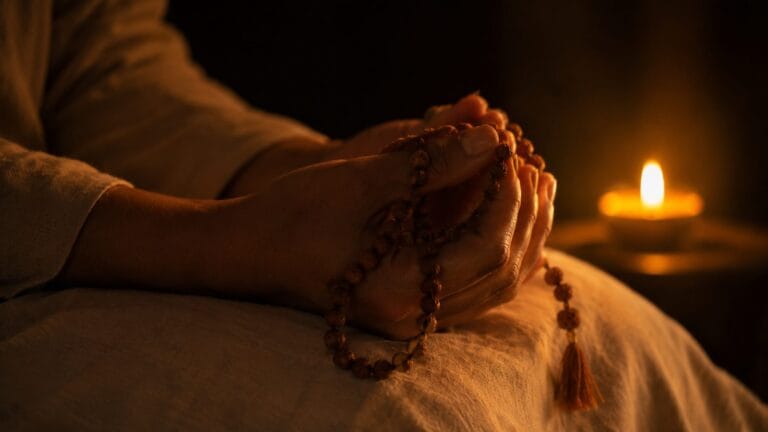
- Counting the rounds: Use a mala (prayer beads) to count your rounds, or use a jap counter app like Devta App – which keeps an accurate account of your recitations so your mind stays free to focus on the words rather than the count.
- Key rules – common myths corrected: You do not need to be fasting to recite the Chalisa. You do not need to complete it in a single unbroken sitting if circumstances interrupt you (though continuity is ideal). Mental recitation (without moving the lips) is fully valid and considered powerful by classical teachers including Swami Sivananda.
- The 100-recitation tradition: Verse 38 itself promises that 100 recitations bring liberation from bondage. Many devotees undertake a 40-day or 100-day practice of daily recitation to seek Hanuman’s grace.
About the Hanuman Chalisa
The Hanuman Chalisa was composed by the poet-saint Tulsidas around 1575 CE in the Awadhi dialect of Old Hindi. It is a devotional hymn of 40 verses (chalisa means “forty” in Hindi) in praise of Lord Hanuman, the devoted disciple of Ram. The text is drawn from the broader tradition of the Ramcharitmanas – Tulsidas’s monumental retelling of the Ramayana in vernacular Hindi.
For the Hindi version with verse-by-verse Hindi meanings, see the companion page on our blog. The Chalisa has been part of daily devotion for hundreds of millions of Hindu devotees across India, Nepal and the diaspora for over four centuries – making it one of the most-recited devotional texts in human history.

How many verses does the Hanuman Chalisa have?
The Hanuman Chalisa has 40 chaupais (quatrains), plus 2 opening dohas (couplets) and 1 closing doha – 43 verses in total. ‘Chalisa’ means forty in Hindi, referring to the 40 main verses.
Who wrote the Hanuman Chalisa?
The Hanuman Chalisa was written by the poet-saint Tulsidas around 1575 CE (16th century) in the Awadhi dialect of Hindi. It is part of his wider work glorifying Lord Ram and his devotees.
How long does it take to recite the Hanuman Chalisa?
A single recitation takes about 8-10 minutes. Many devotees recite it once or 11 times daily. Tuesday and Saturday are considered especially auspicious for Hanuman Chalisa recitation.
Related Reading