Counting to 108, Without Losing Your Place
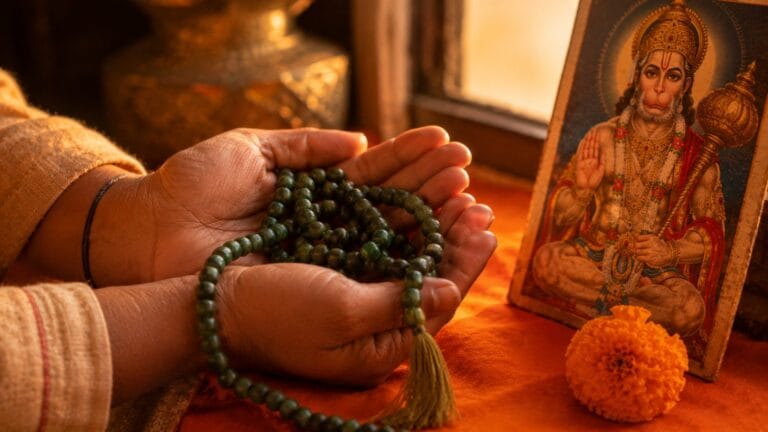
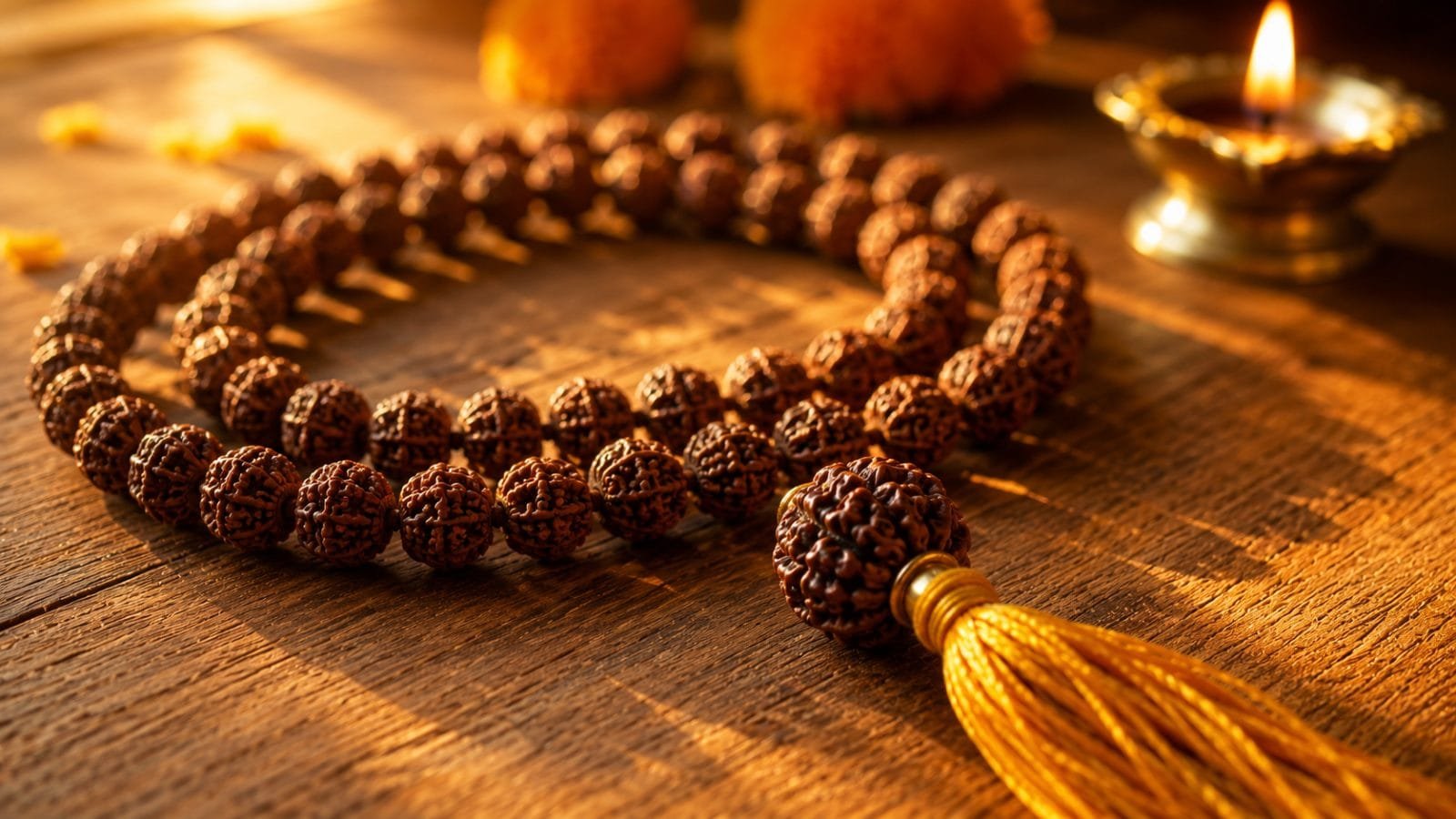
Every japa mala has 108 beads and one more – the sumeru, the bead that marks the turn. The reason it exists is not ornamental: it is the mala’s answer to a problem every practitioner knows. You lose count. The sumeru does not tell you what number you are on within a round – it tells you when the round is complete, so you can begin the next one cleanly. It is the original “you are here” marker.
A 108 counting app is the digital equivalent: it holds every tap independently, marks the round at 108, and does the one thing the sumeru cannot – it remembers everything, even when you are interrupted.
Why 108? The Number Across Traditions
108 is not an arbitrary number. It appears repeatedly across Sanskrit texts as traditionally significant for repetition practice. There are 108 Upanishads. A standard japa mala has 108 beads. Manusmriti 2.85 attributes special significance to japa practice compared to other ritual forms. “Traditionally, 108 is the number at which one round of japa on a mala is complete” is the simplest accurate framing – and that tradition is old enough and consistent enough across multiple schools that it does not need further justification.
There is one neuroscience-adjacent finding worth mentioning honestly: a 2024 study by Mohanty et al., published in an Elsevier journal, measured brain activity before and after exactly 108 repetitions of the Hare Krishna mahamantra and found a rise in alpha brainwave relative power. That is an interesting early finding in a small study – it is not proof of any mechanism, and it does not establish that 108 repetitions is neurologically special. The honest framing is: a small 2024 EEG study found this; larger replications would be needed to know more. Do not let anyone tell you “108 is scientifically proven” – it is not, and the tradition does not need that claim to stand.
For a 108 japa counter app or 108 counter app to mirror the tradition correctly, it should treat 108 taps as one complete round – exactly as the physical mala does.
The Sumeru Bead: The Original “You Are Here” Marker
The sumeru is the single larger bead at the head of the mala – visually distinct, set slightly apart. The traditional instruction is: do not cross the sumeru. When you reach it at the end of a round, you reverse direction and begin the next round from the bead you just came from. The sumeru stays at the junction point of every round.
Some schools say that reversing at the sumeru rather than crossing it keeps the energy of the practice continuous – unbroken from one round to the next. Whether or not that is your tradition, the practical function is clear: the sumeru is a fixed reference point that closes one round and opens the next cleanly.
What the sumeru cannot do: tell you what number you are at within the current round, or remember the count from yesterday, or add today’s total to last week’s. It is a round-marker, not a session tracker. The moment you set down the mala and pick it up tomorrow, the sumeru can tell you nothing about how many rounds you have done so far in your sankalp. For more on the sumeru bead and its significance in the mala structure, see the detailed guide at jap mala 108 manke aur sumeru ka rahasya.
How People Lose Count – and Why It Matters for Your Sankalp
The loss scenarios are consistent across practitioners: a thought intrudes and you look up not knowing whether you pressed 27 or 37; someone speaks to you mid-mala; you doze off slightly in early morning practice; your eyes drift to your phone screen for a fraction of a second and the rhythm breaks. The classic guidance from teachers including Swami Sivananda is: when in doubt, go back a few and recount. Better to count more than to count less.
The problem is not any single instance of recounting – it is the cumulative effect. If you systematically under-count or over-count by ten repetitions per session, and you practice daily for a year, your actual sankalp total may be off by thousands from what you believe. For a practice you want to trust – where the count itself is part of the commitment – that friction is real.
A 108 japa counter app handles this by tracking each tap independently as it happens. There is no mental tally to maintain. At any moment during a session, you can glance at the screen and see exactly where you are in the current round. You never have to decide whether to go back five because you are not sure – the screen tells you.
How the 108-Loop Works in Devta App
The 108 counter in Devta App mirrors the physical mala structure directly. Each tap counts one repetition. When the count reaches 108, the app registers one complete mala round – equivalent to crossing the sumeru on a physical mala – and resets to 0 for the next round. The round count on the screen increments by one. The session continues without interruption.
You can set a target in rounds – for example, 10 rounds equals 1,080 repetitions – and see live progress through the session. If you stop mid-round and close the app, the partial count is saved to your account. When you return, your session total and your sankalp total both reflect the correct numbers.
The running sankalp total accumulates across all sessions. 108 repetitions this morning adds to the 5,400 you did earlier in the week. Nothing resets between sessions. For the detailed guide on the 108 counter and ginti structure in Devta App, see 108 counter app – jap ginti phone par.
Building to 1008 – The Sankalp Ladder
Once 108 repetitions is handled by the app – you are not counting, you are simply tapping – moving to 1,008 daily becomes a natural next step. That is ten malas, a common target for practitioners with a committed daily practice. Then 10,000 over a month. Then sankalp-scale numbers: a lakh, a crore.
Each milestone only becomes honest if you trust your count. This is where the account-sync matters most: a crore of Ram naam done over three years is a real sankalp only if the number is accurate, and only if that number survives the two or three phone changes you will make in that period. A local-only 108 counting app cannot give you that. An account-synced japa counter app can.
Devta App also supports family sankalps – multiple accounts contributing to a shared practice. If you have heard of collective naam jap at the scale of 13 crore across a community of devotees, that kind of shared count is what the multi-account structure is built for. Your household can work toward a collective total while each person’s individual count remains their own.
If You Lose Count Mid-Session – What Actually Happens
This is a question that comes up often: if something goes wrong during an app session – phone dies, app crashes – does the count still register?
The honest answer is: the count up to the last sync point is saved. Devta App syncs counts as you tap – not only at the end of the session. If your phone battery dies at tap 74 of a round, the synced portion of that round is saved; the unsynced taps in the few seconds before shutdown may be lost. This is the same as a mala: a bead you did not actually press is a bead you did not count. The app does not invent repetitions.
Most teachers, including Swami Sivananda, are clear that in japa practice, the intention (bhav) matters more than arithmetic precision. Going back a few counts when uncertain – as the classical guidance recommends – is always available in the app too: just tap a few more before closing the session. The count you carry is honest.
108 is a round. A round is a moment you gave entirely to the Name. The number holds the practice honest; the intention makes it sacred.

Why 108 repetitions for japa?
108 is the number of beads on a traditional japa mala, and one complete round of the mala equals 108 repetitions. The number appears across multiple Sanskrit texts as traditionally significant for repetition practice. A 108 counting app mirrors this structure: 108 taps equals one round, matching the physical mala exactly.
What happens if you lose count during japa?
Most traditional teachers say: when in doubt, go back a few repetitions and continue. Better to count a few more than to count less. In a 108 japa counter app, each tap is recorded individually – you cannot lose count mid-session because the app holds it for you. If you are on 74 and get distracted, you are still on 74 when you look back at the screen.
Does the Devta App 108 counter stop automatically at 108?
Yes. When you reach 108 taps, the app registers one complete mala round and resets the counter to 0 for the next round, exactly as you would reverse direction at the sumeru bead on a physical mala. The mala-round count increments, and your total repetitions keep accumulating across rounds and sessions.
Related Reading