Do You Have to Chant Out Loud for Naam Jap to Work?
Most people picture japa as sound: a devotee in a temple loudly repeating “Ram Ram Ram,” a group in kirtan singing at full voice, or someone murmuring prayers over their mala. The assumption runs deep – if no one hears it, does it even count? If you have wondered whether silent japa really works, the oldest teachings on the subject have a clear answer: not only does it work, the tradition considers it the most powerful form of all.
This is not a minor footnote. It changes the practice entirely – because it means you can do the deepest form of japa anywhere, anytime, in any state, with no sound and no mala required. On a crowded bus. In a hospital waiting room. Lying in bed at night. The Name travels silently, and that silence is the point.
The Four Types of Japa – and the Ranking That Surprises Most People
Swami Sivananda of the Divine Life Society outlined four classical types of japa, each with a different relationship between mind, breath, and sound:
- Vaikhari (loud chanting): The Name is spoken clearly and audibly. This is the most familiar form – kirtan, morning prayers, repeating the Name at full voice. Energizing and good for group settings.
- Upamshu (whispered or lip-movement chanting): The Name is formed on the lips but barely audible, somewhere between speaking and thinking. A middle ground, useful when full sound is not possible.
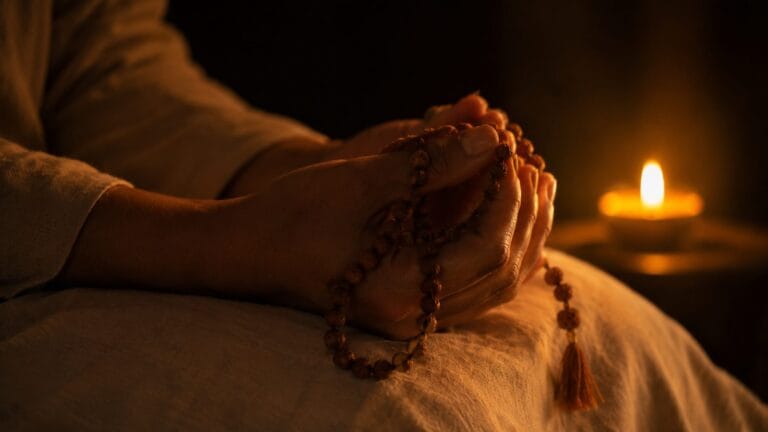
- Manasika (mental japa): The Name is repeated entirely within the mind, with no movement of lips, tongue, or breath. Sivananda calls this the most powerful form of japa.
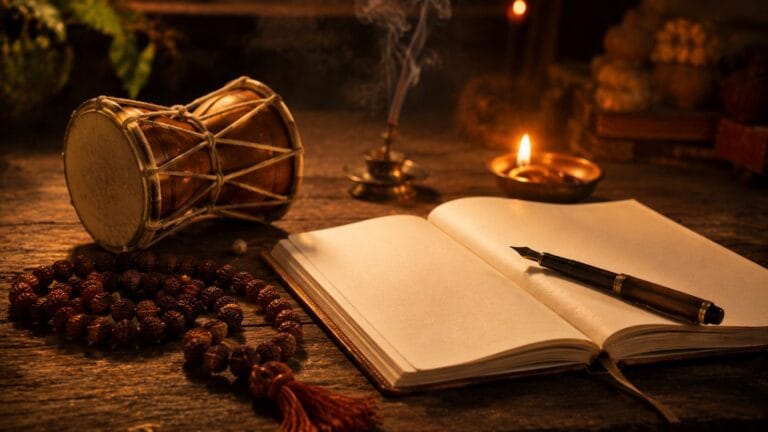
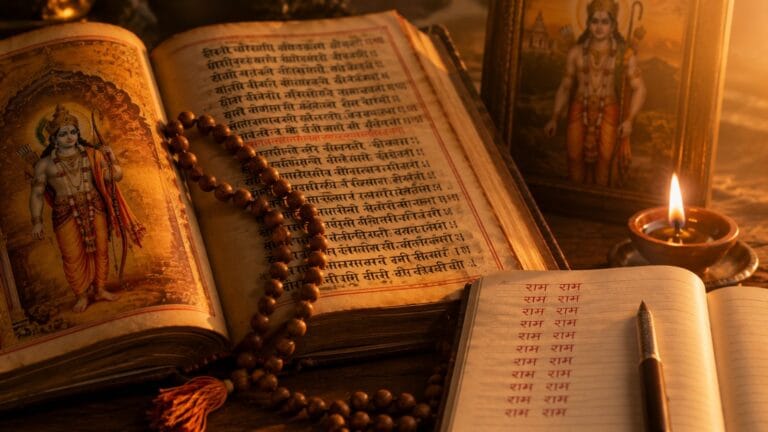
- Likhita (written japa): The Name is written repeatedly, engaging the hand, eye, and mind together. Ram Naam notebooks are a well-known expression of this practice.
The ranking matters: the more the practice moves inward – from sound to whisper to thought – the more the mind is directly engaged with the Name itself, rather than with the machinery of producing it. Vaikhari has its place. But manasika, by tradition, goes deepest.
Why Silent Japa Is Considered the Most Powerful
When you chant out loud, part of your mental energy is managing the physical process: regulating breath, moving the mouth, hearing and adjusting the sound. That is not wasted effort – vaikhari has real value, especially for beginners who need the sound to anchor the mind. But it means your attention is partly outside you, in the sound you are producing.
In manasika japa, all of that energy turns inward. There is no sound to manage, no breath to regulate for speech, no external anchor. The Name becomes a flame burning in the mind alone. The quality of attention available to the Name is, in this sense, undivided. Saints across traditions describe mental japa as the practice where the distance between the chanter and the Name begins to close – where repetition can eventually dissolve into a steady, uninterrupted awareness of the divine.
This is also why manasika japa is described as having no restrictions. No place is impure for a thought. No time is wrong for a mental remembrance. Whether you are in a hospital, on a train, in a difficult moment, or simply lying quietly at night – silent japa is always available, always complete.
What Early Science Suggests
Traditions do not need scientific validation, but where early evidence exists and is honest, it is worth noting. A 2025 heart rate variability (HRV) study by Acharya et al. (n=40) examined what happens to the autonomic nervous system during different forms of chanting. The finding: silent chanting preserved vagal tone and parasympathetic activity – the system associated with calm and recovery – while loud chanting raised heart rate and sympathetic activity, the more activating branch.
This is early evidence from a small study, not proof of any mechanism. But it maps cleanly onto the traditional description: loud chanting is energizing; silent chanting is settling. Both are valid depending on what you need. A separate study by Bernardi et al. (BMJ, 2001, n=23) found that slow rhythmic recitation – including mantra – naturally slows breathing to around six breaths per minute, raising heart rate variability. This calming effect appears to work across chanting forms, riding the slow paced breath that recitation imposes.
For mental health context: these are early, small studies. Japa is a spiritual practice, not a medical treatment. If you are dealing with anxiety or depression, please also speak with a qualified professional.
Common Mistakes People Make About Silent Japa
Thinking louder means more devout. This is the most common error. Volume is not devotion. A whispered prayer from the depths of the heart carries more than a loud one said mechanically. The tradition does not rank sincerity by decibels.
Doubting whether it “counts” if no one hears it. This doubt reveals a subtle confusion: japa is not a performance for anyone outside you. The Kali-Santarana Upanishad says the Name works “whether pure or impure” – and certainly whether loud or silent. The Name is not impressed by sound. It responds to attention.
Using sound as a crutch because the mind keeps wandering. If the mind wanders in silent japa, the answer is not to always fall back to loud chanting. A wandering mind is the universal experience in meditation. The practice is to notice the wandering and gently return. Over weeks and months, the mind learns to stay. Silent japa, practiced regularly, trains this capacity faster than loud chanting because there is no external sound to lean on.
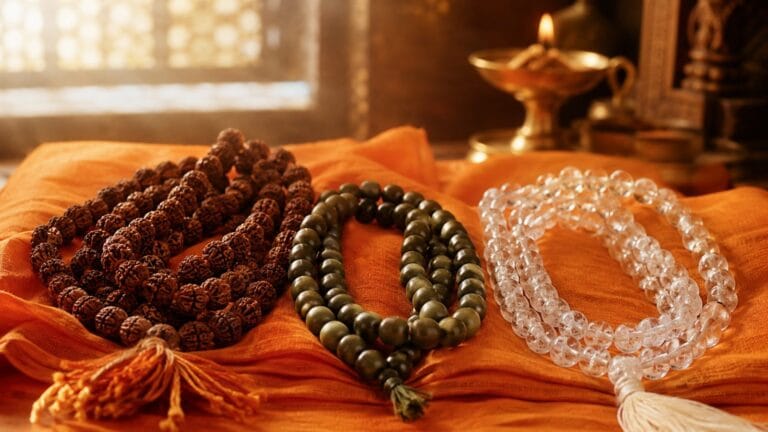
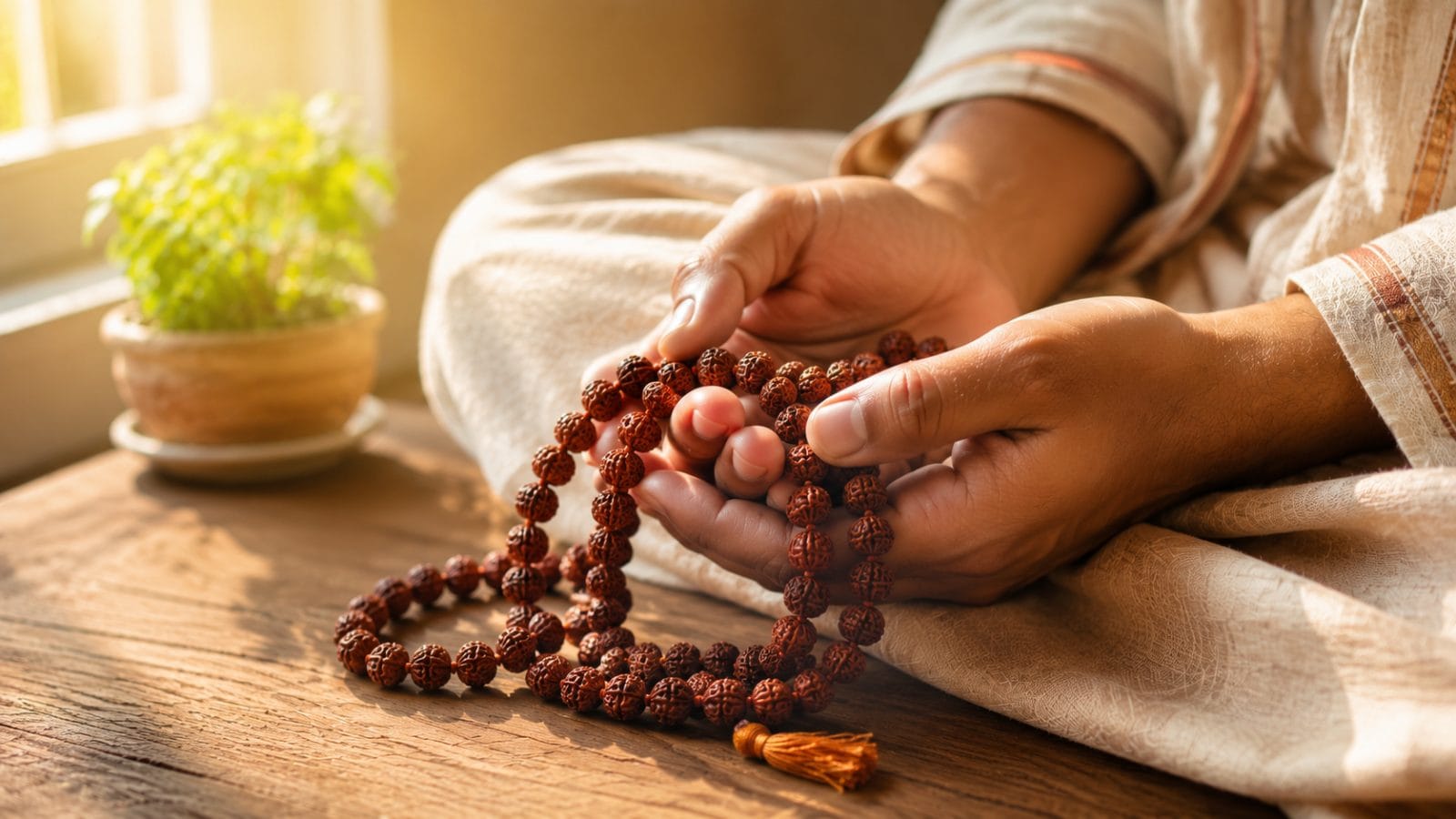
Skipping silent japa because they think a mala is needed. Manasika japa needs no mala. You can count on your fingers, use a number-based sankalp (“108 repetitions”), or simply let the Name flow without counting. The mala is a tool for the outer forms; the inner form is free.
A Practical Guide: When to Use Which Form
Rather than picking one form and sticking to it forever, experienced practitioners move between them based on context and state of mind:
- Morning seated practice: Begin with a few minutes of loud chanting to wake the mind, then transition to upamshu, then settle into manasika for the deepest portion.
- Kirtan or group worship: Vaikhari – full voice, the sound of the collective carries everyone.
- At work or in transit: Manasika only. No one around you needs to know. The Name moves in the mind while the hands and eyes do their task.
- Before sleep: Manasika, lying down. Sivananda specifically affirms that lying-down mental japa is valid. The Name becomes the last thought as you drift off.
- When feeling dull or unfocused: A short burst of vaikhari brings the mind back; then return to silence.
If keeping count during mental japa is the hard part – especially when you are moving through your day – a japa counter like Devta App removes that friction entirely. One tap per repetition, so your attention stays on the Name and not on tracking the number. Silent japa, fully supported, wherever you are.
The Name does not need your voice. It needs your mind. And your mind is always with you.
Chant out loud when it serves you – for energy, for community, for a mind that needs anchoring in sound. But never doubt that the quiet form is equally real, equally complete, and in the deepest sense, the most direct path to what you are seeking.
Is silent (mental) japa as effective as chanting out loud?
According to Swami Sivananda and the Vedic tradition, manasika (mental) japa is considered the most powerful form – more so than loud or whispered chanting. The mind’s direct, undivided engagement with the Name, without the effort of sound production, makes it the deepest practice.
What does early science suggest about silent vs loud chanting?
A 2025 HRV study (Acharya et al., n=40) found that silent chanting preserved vagal tone and parasympathetic activity, while loud chanting raised heart rate and sympathetic activity. This is early evidence only – not proof – but it aligns with the tradition’s view that silent japa is calming while loud is more energizing.
When should I chant out loud instead of silently?
Vaikhari (loud) chanting is ideal for kirtan, group practice, when you feel dull or sleepy, or when you want to energize your worship. Mental japa is best for deep meditation, sensitive settings, pre-sleep practice, or when you want the subtlest and most inward effect.
Related Reading