How Many Times Should You Chant a Mantra? Science Just Answered
Most people chant until it “feels right” or until they get distracted. But the tradition has a specific answer – 108 times minimum, every day – and a 2024 EEG study happened to test exactly that number. What they found in participants’ brains after 108 repetitions is worth knowing before you next sit down to chant.
The Ancient Rule: 108 to 1080 Daily
Swami Sivananda of the Divine Life Society (dlshq.org), drawing on the classical japa tradition, laid this out clearly: a serious practitioner should chant between 108 and 1080 times per day – that is, one to ten malas (rounds on a 108-bead rosary). Beginners start at one mala. Consistency matters more than quantity – the same count every day, without missing, builds a deeper groove in the mind than an occasional marathon session.
The range is intentional: 108 is the sacred minimum, 1080 is for dedicated sadhana. Most devotees aim for one to three malas daily.
Why 108 Specifically?
Three reasons converge on the same number:
- Astronomical: In Vedic cosmology, the sun’s distance from Earth is approximately 108 times the sun’s diameter, and the moon’s distance is 108 times the moon’s diameter. The 27 lunar mansions (nakshatras) each have 4 padas: 27 x 4 = 108. The number represents the whole cosmos.
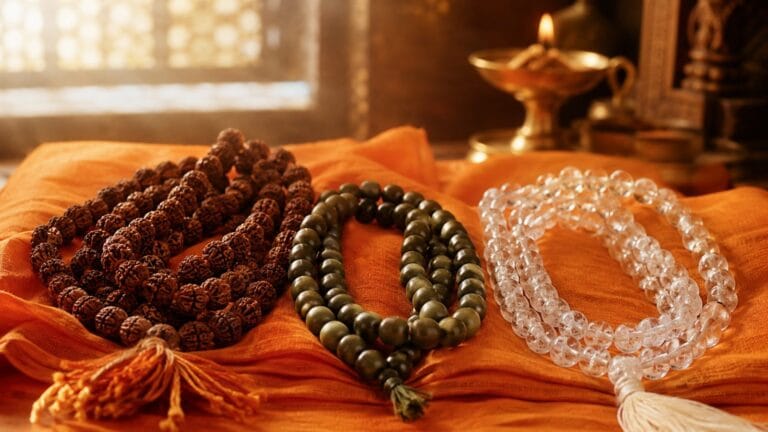
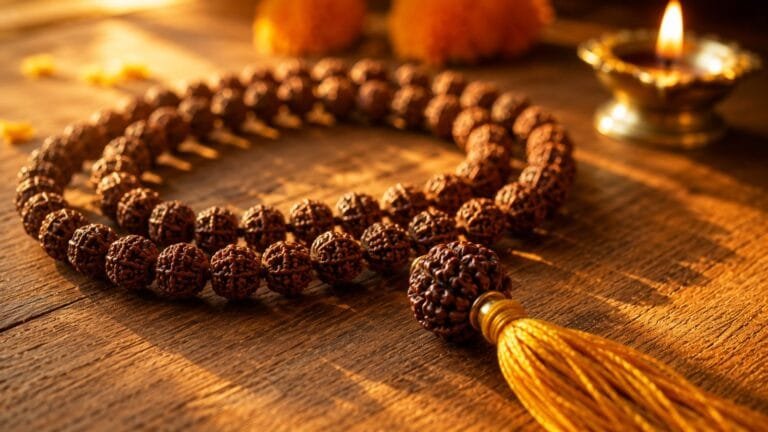
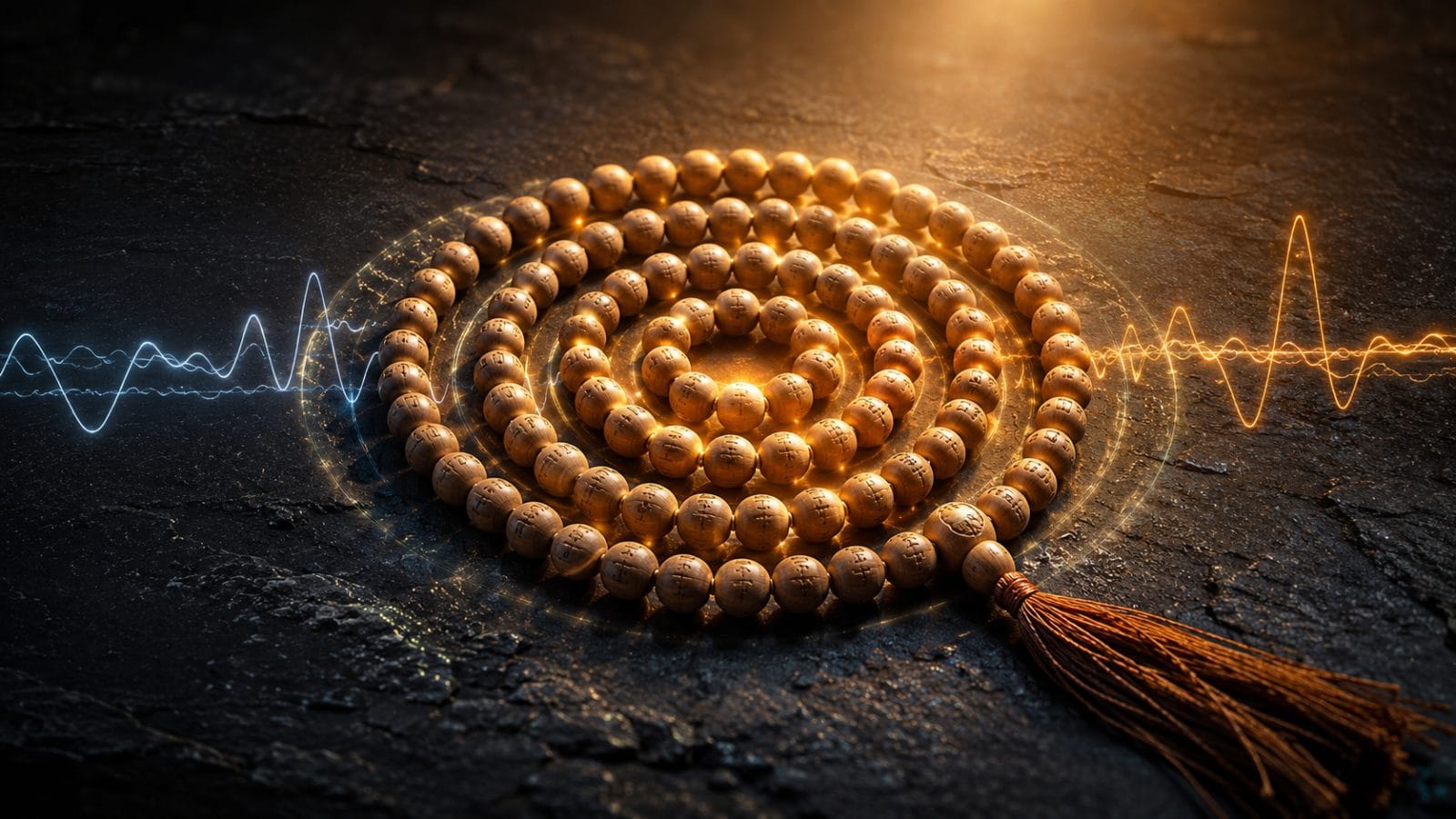
- The mala: A standard japa mala has 108 beads plus one sumeru (guide bead) that is never counted – marking the start and end of each round. When you reach it, you reverse direction rather than crossing it.
- Neurological hint: In a 2024 EEG study (Mohanty et al., published in Elsevier), participants chanted the Hare Krishna maha-mantra for exactly 108 repetitions. Before chanting, their alpha brainwave power measured around 24.56%. After completing the 108 reps, it had risen to 32.94% – alpha waves being strongly associated with calm, focused awareness. This is a single small study; it is not proof of anything universal. But it is a striking coincidence that the tradition’s minimum count is precisely the dose that researchers chose to measure.
What If You Can’t Manage 108?
Tradition accommodates imperfect days. Half a mala (54 beads) is better than nothing. A quarter mala (27) is better than none. What matters most, as Sivananda emphasized, is the daily habit – not the number. Skipping entirely for a week does more damage to the practice than chanting 27 on a busy day.
One practical reason many people fall short of 108 is the counting burden. If you are mentally tracking “forty-three, forty-four…” your attention is split. This is what a japa counter is for – you tap once per repetition and focus entirely on the name.
Can You Chant More Than 1080?
Yes. Advanced practitioners in retreat conditions chant far more. The 1080 upper limit in Sivananda’s prescription is for householders maintaining a daily practice alongside normal life. Akhand jap (continuous chanting over many hours or days) is a different, special practice with its own protocols – not a daily norm.
The Right Way to Count
Three approaches work:
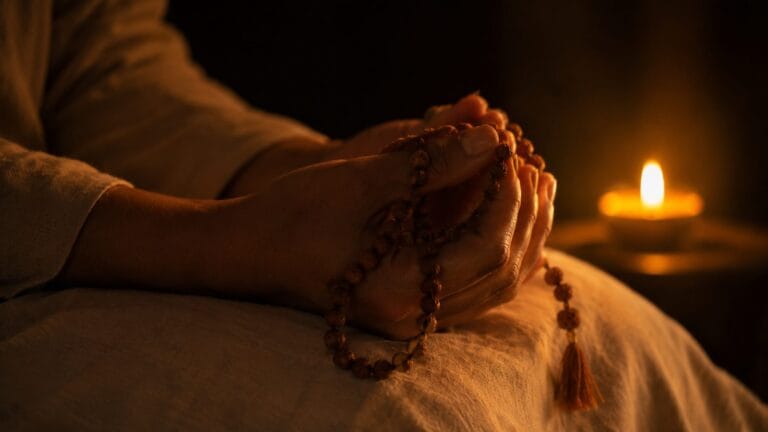
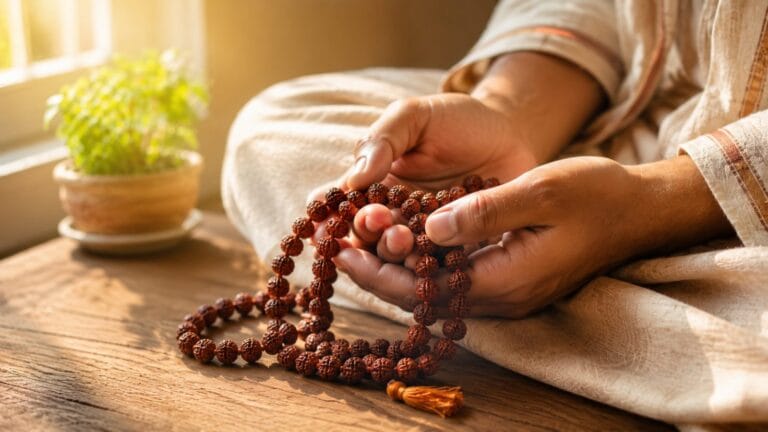
- Rudraksha or tulsi mala: 108 beads, held in the right hand, rolled with thumb and middle finger. Never cross the sumeru bead – reverse at it each round.
- Mental counting: Works in public when a physical mala is impractical. Experienced practitioners count in groups of 9 or 18 to reduce cognitive load.
- Digital counter: One tap per repetition, automatic mala completion at 108. Removes the count entirely from your attention.
Note: This article is for informational and spiritual purposes only. It is not a substitute for medical advice or treatment.
Start Your Daily Practice with Devta App
Devta App is a free japa counter built for exactly this – one tap per name, auto-count to 108, streak tracking to keep the daily habit alive. Whether you chant Ram Naam, Om Namah Shivaya, or the maha-mantra, it handles the counting so you handle the devotion.

Is 108 the same in all traditions?
The 108-bead mala is near-universal across Hindu, Buddhist, and Jain traditions. The number appears in the Vedic, Tantric, and Vaishnava streams with different but converging rationales. The practice prescription of 108+ per day is consistent across the classical japa teachers.
Does the mantra have to be the same one every time in a session?
Yes, within a single sitting. Switching mantras mid-session dilutes concentration. If you chant multiple mantras in a day, complete full rounds of each separately.
What if I lose count on the mala?
Complete the round from where you are and continue. One lost count does not invalidate a session. If it happens often, switch to a digital counter – your practice should not be derailed by accounting anxiety.
Related Reading