Om Namah Shivaya: The Five Syllables That Hold the Universe
Five syllables. That is all “Om Namah Shivaya” really is once you strip away the awe around it – Na, Ma, Shi, Va, Ya. A child can learn it in a minute, an elder can chant it without glasses or a book, and a sannyasi can spend a lifetime sinking deeper into it. Of all the mantras in the vast Hindu tradition, this is the one held to be the most universal Shiva mantra of all. And the secret of its power is not in its length. It is in its smallness.
Most of us have said these words a thousand times without ever pausing to ask what they mean, or why exactly five syllables, or which mala the tradition asks us to hold while chanting them. Let us unfold all of it, layer by layer – the plain meaning, the five-syllable secret, the five elements it is said to carry, and how to actually make it your daily practice.
What “Om Namah Shivaya” actually means
Take the words at face value first. “Namah” means a bow, a salutation, the act of surrendering and lowering oneself. “Shivaya” means “to Shiva” – and Shiva itself means the auspicious one, the ever-pure. So “Namah Shivaya” translates simply and beautifully as “I bow to Shiva.” Nothing more complicated than that. The entire mantra is a devotee laying down their head, their ego, their stubborn sense of self at the feet of the divine.
This is where its quiet strength lives. It is not a request. There is no “give me this, grant me that” hidden in it. It asks for nothing at all – it only bows. In the bhakti tradition it is said that where wanting ends, real devotion begins, and few mantras embody that as purely as these five syllables. You are not bargaining with God. You are simply turning toward him and saying, again and again, “I am yours.”
Why exactly five syllables – the Panchakshara secret
Now count the syllables in “Namah Shivaya”: Na – Ma – Shi – Va – Ya. Exactly five. This is why the tradition gives it a special name – the Panchakshara mantra, from “panch” (five) and “akshara” (syllable). It is Shiva’s five-syllable mantra, and that count is not an accident; it is the whole identity of the chant.
So where does “Om” fit? Om is placed before the five syllables. Om is the pranava, the primordial sound, the seed of every mantra. When you say the full “Om Namah Shivaya,” you are sounding the pranava first and then chanting the five-syllable Panchakshara. This is why a common confusion is worth clearing up right away: the five syllables are Na-Ma-Shi-Va-Ya, the core of “Namah Shivaya.” Om is the sacred sound added in front – so with Om there are six sounds in all, but the name “Panchakshara” comes from those original five.
- Na – the first syllable
- Ma – the second
- Shi – the third
- Va – the fourth
- Ya – the fifth
These five are the soul of the mantra. And on these five, the tradition has laid one of its most beautiful teachings of all – that they hold the five elements of the universe itself.
Five syllables, five elements: the universe in your breath
Traditionally it is said that the five syllables of the Panchakshara correspond to the five great elements – the pancha mahabhuta from which all of creation is woven: earth, water, fire, air and ether (space). The teaching is that the same five elements that make up the mountains and oceans outside you, and the very body you sit in, are gathered into these five small syllables. Chant them, and you are said to be bowing the entire cosmos, gross to subtle, back to the one consciousness it came from.
That is the image behind the title – five syllables that hold the universe. When you chant “Namah Shivaya,” it is said you are not merely repeating a name; you are placing earth, water, fire, air and ether all at Shiva’s feet at once. From the densest clay to the empty sky, everything you are made of bows in a single breath. This is why the mantra is felt to be so complete despite being so short.
One honest caution, though. This five-syllable-to-five-element mapping is a symbolic, traditional teaching, not a scientific formula – and different teachers assign the elements to the syllables in different orders. So receive it as a deep and lovely meditation, not as a rigid law. The point was never which exact syllable equals which element. The point is that one of the shortest mantras in existence quietly carries the bow of the whole of creation.
What people most often get wrong
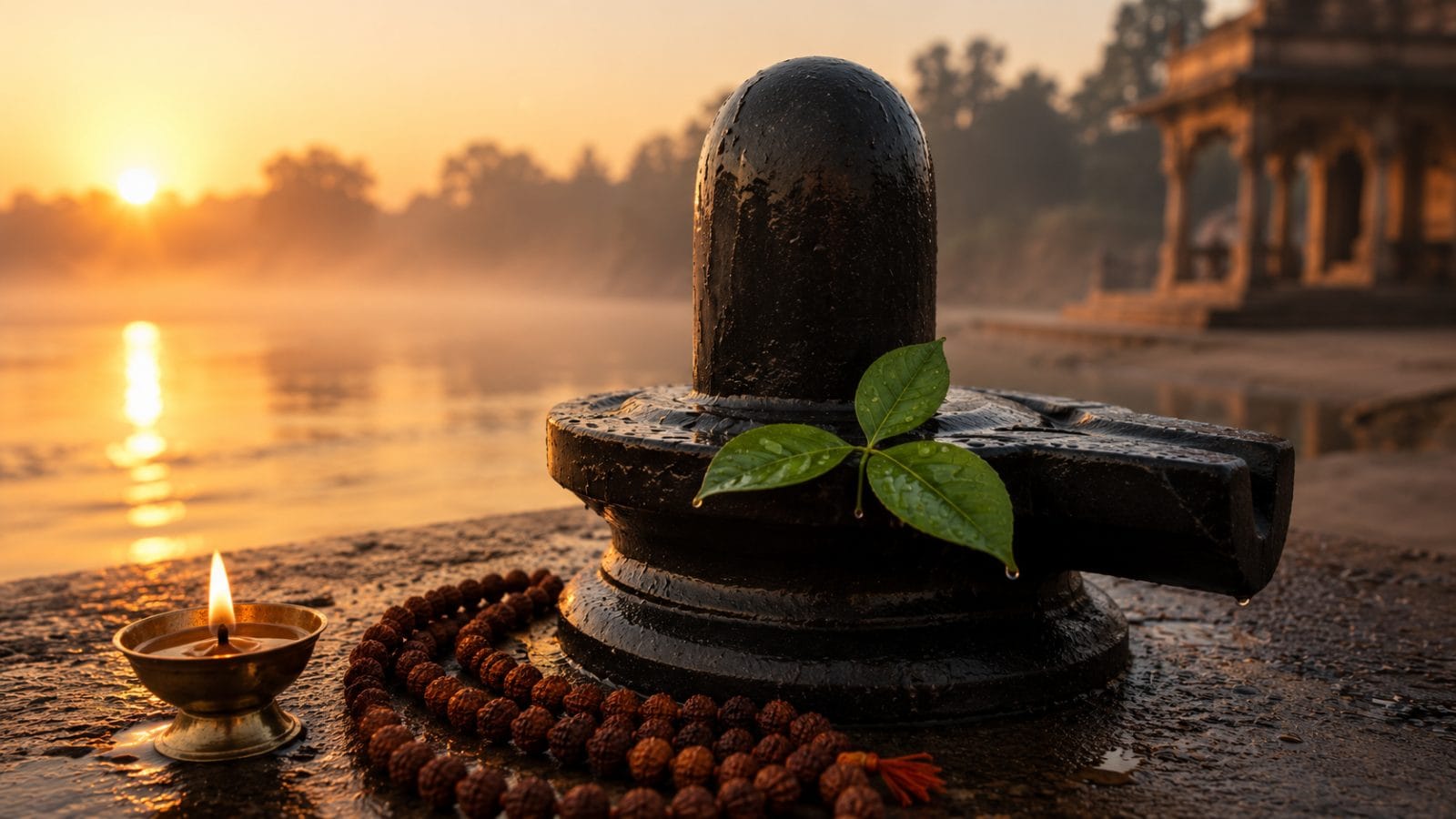
A few misunderstandings cling to this mantra. The first we have already touched: people count “Om” among the five syllables. It is not – the Panchakshara is the five of “Namah Shivaya,” and Om is the pranava seed that comes before. The second is about the mala. For Shiva, the tradition asks for a rudraksha mala, never tulsi. Tulsi beads are traditionally kept for Vishnu, Krishna, Rama and Hanuman, and are traditionally not used for Shiva. Rudraksha is considered a part of Shiva himself, and because it is acceptable for almost any deity, it is the most natural choice for a Shiva devotee.
The third mistake is believing the mantra only “works” if chanted loudly and forcefully. The saintly tradition says the opposite.
Swami Sivananda taught that of the four forms of japa, the manasika or mental form – silent repetition of the name within the mind, without even moving the lips – is held to be the most powerful of all.
So the depth is not in volume but in attention. Begin aloud or in a whisper if that helps you settle, but the direction of travel is always inward, toward the name turning quietly within.
How to begin chanting it today
The beauty of “Om Namah Shivaya” is that there is almost nothing to learn before you start. A simple way to begin:
- Time and place: A quiet corner is enough. Early morning, around the pre-dawn hours, is traditionally held to be the most powerful time, though the Name may be remembered at any hour.
- Count: Start with 108 repetitions – one full round, what the tradition calls one mala. Build from there as it becomes natural.
- Mala: Use a 108-bead rudraksha mala. Do not cross the sumeru (the head bead) – turn the mala back from there instead.
- Feeling: Let each “Namah Shivaya” carry the inner sense of “I surrender myself to you,” not a rushed, mechanical word.
- Depth: Begin softly, then close the lips and let it run within – this is the move toward manasika, the mental japa.
The single biggest obstacle for most beginners is not the chanting – it is keeping count. Did I finish the round? Was that ninety beads or a hundred? The mind keeps slipping off the name and onto arithmetic. If keeping count is the hard part, a jap counter like Devta App handles the number for you, so your full attention stays on the Name rather than the math – tap it anywhere, anytime, with no mala to touch, and at night you can see how many times the Name was remembered. That small thread of daily consistency is what slowly steadies the heart.
Many people also notice that a few rounds of slow, silent chanting leave the mind quieter and more settled. Early evidence is interesting here – one study found that silent, inward chanting tended to preserve the calming, parasympathetic side of the nervous system more than loud chanting did, which sits neatly with the tradition’s preference for manasika japa. This is a devotional and wellbeing practice, not a substitute for medical treatment – so take the calm as a gift, not a cure.
That is the real secret of the Panchakshara: one of the smallest mantras ever spoken, yet vast enough to hold earth, water, fire, air and sky in a single bow. Chant it – not loudly, but inwardly. Five syllables, and the whole noise of the universe within you grows still.
What does Om Namah Shivaya mean?
Namah Shivaya means ‘I bow to Shiva.’ Namah is reverent bowing or surrender, and Shivaya means ‘to Shiva.’ Adding Om in front makes it the Panchakshara, the five-syllable mantra, so the whole chant means ‘I surrender myself to Shiva, the auspicious one.’
Why is Om Namah Shivaya called the Panchakshara mantra?
Because Namah Shivaya has exactly five syllables – Na, Ma, Shi, Va, Ya. Panch means five and akshara means syllable. Om is the seed sound placed before these five, so the core five-syllable mantra is Namah Shivaya.
Which mala should I use to chant Om Namah Shivaya?
Traditionally Shiva is chanted on a rudraksha mala; tulsi beads are traditionally not used for Shiva. Rudraksha is considered a part of Shiva himself and is acceptable for almost any deity. Begin with one round of 108.
Related Reading