Krishna vs Rama Naam: Which Should You Chant?
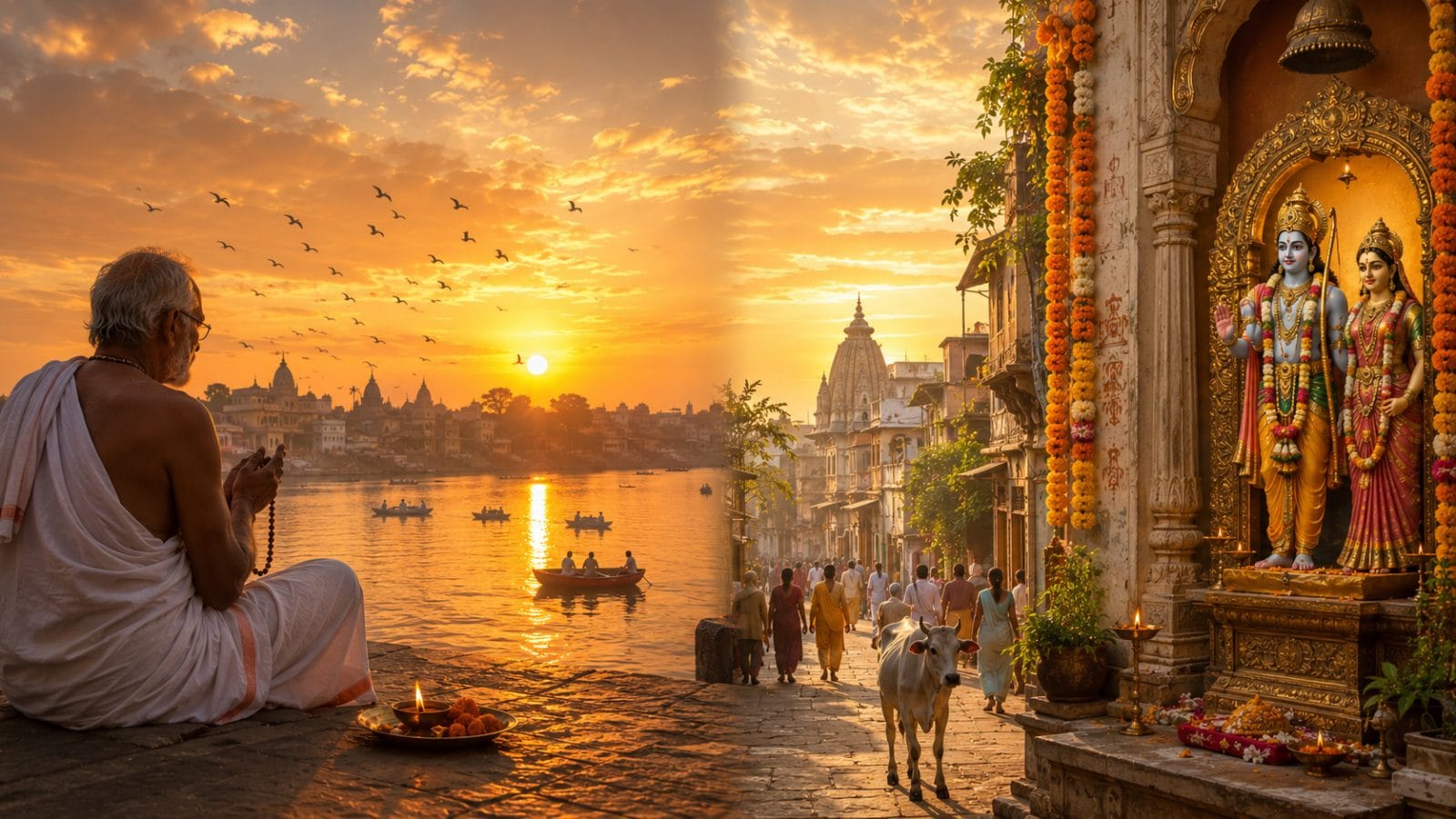
At every ghat in Varanasi, old men murmur Ram Ram as they bathe at dawn. Three hundred kilometres away, in the narrow lanes of Vrindavan, every greeting is Radhe Radhe – and on every tongue is the Hare Krishna maha-mantra. These two names have shaped Hindu devotion for centuries. And if you are starting your own jap practice, sooner or later this question will surface: which one should I chant?
The honest answer is more interesting than a simple either/or. The scriptures, the saints, and the logic of bhakti all point toward the same surprising place.
The Surprising Answer Hidden Inside the Maha-Mantra
Look closely at the Hare Krishna maha-mantra: Hare Krishna Hare Krishna, Krishna Krishna Hare Hare / Hare Rama Hare Rama, Rama Rama Hare Hare. Ram Naam is already inside it. The question of Krishna versus Rama is, in some sense, a question that the maha-mantra refuses to answer – because it chose both.
The earliest textual source for this mantra is the Kali-Santarana Upanishad, a Vaishnava text of approximately the 16th century. In it, the god Brahma tells the sage Narada that these 16 names – Krishna and Rama together – are the one remedy for Kali Yuga. The Upanishad adds something remarkable: these names need no rules, no purity, no guru initiation. Chant always, pure or impure. The door is open to everyone.
So before we compare, it is worth sitting with this: the tradition that gave us the maha-mantra did not separate the two. It understood them as a single invitation.
Ram Naam: The Name Shiva Whispers at the Moment of Death
If you want to understand how seriously the tradition takes Ram Naam, consider this: at Kashi, the city where Shiva himself presides over the dying, it is believed that Shiva whispers the Tarak Mantra into the ear of every person who dies there – and that mantra is Ram Naam. Tulsidas writes in the Ramcharitmanas: Mahamantra joi japat Maheshu. Kashin mukuti hetu upadeshu. – The great mantra that Maheshwara himself chants; that is what he teaches at Kashi for liberation.
Tulsidas goes further. In the Naam Vandana section he makes a claim that stops you mid-breath: the Name of Ram has liberated more souls than Ram himself. While Ram the person saved one woman – Ahalya – the Name reformed koti (crores) of sinners. He writes: Ram ek tapas tiy tari. Naam koti khal kumati sudhari. (Ram saved one ascetic woman; the Name corrected the corrupt minds of crores.)
This is the spine of Ram Naam’s claim to greatness – not Ram’s deeds, but the power of the Name itself, which Tulsidas says exceeds even the form. For devotees drawn to Rama – to his steadfast dharma, his gentle strength, his love for devotees – Ram Naam carries all of that in two syllables. The traditional mala for Ram Naam is tulsi, and the mantra most associated with it is Om Sri Ram Jaya Ram Jaya Jaya Ram, or the simple repetition of Ram Ram.
Hare Krishna Maha-Mantra: 16 Names That Address Kali Yuga Directly
The Hare Krishna maha-mantra’s theology is distinct. Where Ram Naam speaks of the Name’s power to redeem, the maha-mantra frames itself as a call to the divine energy (Hara, the feminine form of Hari) to take hold of the mind and lift it toward Krishna. It is a mantra of longing and surrender, not just remembrance.
The Kali-Santarana Upanishad’s framing is urgent: Kali Yuga corrupts everything – rituals fail, tapas weakens, concentration scatters. The one thing that still works is the Name. No ritual preparation, no special place, no initiation required. This radical accessibility is why Chaitanya Mahaprabhu took this mantra to the streets in the 15th-16th century, singing it in public processions (sankirtana) and bringing it to people who would never enter a temple.
A 2024 EEG study (Mohanty et al., published in Elsevier) measured brainwave changes in subjects who chanted the Hare Krishna maha-mantra for exactly 108 repetitions. Alpha wave relative power rose from 24.56% to 32.94%, suggesting a shift toward calm, wakeful awareness. This is early evidence, not proof of anything medical – but it maps onto what devotees have reported for centuries: the mantra settles the mind. The study used exactly 108 reps, which is one complete mala.
How to Choose – Theology vs. the Heart
Both Krishna and Rama are Vishnu-tattva – expressions of the same supreme reality in different rasas (devotional flavors). There is no theological hierarchy between them. The difference is the relationship the devotee feels.
Ask yourself: which name arises naturally when you are in distress, or when something fills you with sudden gratitude? That is usually the answer. Some people feel drawn to Rama’s quiet, enduring presence – the elder brother, the ideal king, the one who never wavers. Others feel drawn to Krishna’s playful, intimate closeness – the friend who knows everything about you and loves you anyway. Both are valid paths. Both lead to the same place.
If your family has a tradition – if your grandmother chanted Ram Ram, or your father kept a Krishna shrine – honoring that lineage is itself a spiritual act. The guru of your soul is often the devotion you grew up around.
If you genuinely cannot decide, start with the maha-mantra. It contains both names, it requires nothing from you, and it has been road-tested by centuries of devoted practitioners in every condition imaginable.
Common Mistakes When Choosing a Mantra
The biggest mistake is overthinking the choice and delaying the practice. Every day spent deciding is a day of jap lost. Both names are open to you right now. Pick one and begin.
The second mistake is switching frequently – chanting Ram Naam for a week, then the maha-mantra for another, then a Shiva mantra because a friend recommended it. The tradition consistently advises choosing one name and staying with it long enough to let it settle into your rhythm. Most teachers suggest at least 40 days of consistent jap before evaluating. Depth comes from commitment, not variety.
The third mistake is believing the choice is final and irreversible. It is not. Many devotees find that they chant Ram Naam in younger years and the maha-mantra becomes their main practice later, or vice versa. The Name is not a contract. It is a relationship – and relationships deepen and shift over a lifetime.
Mala, Counting, and What Consistency Actually Gives You
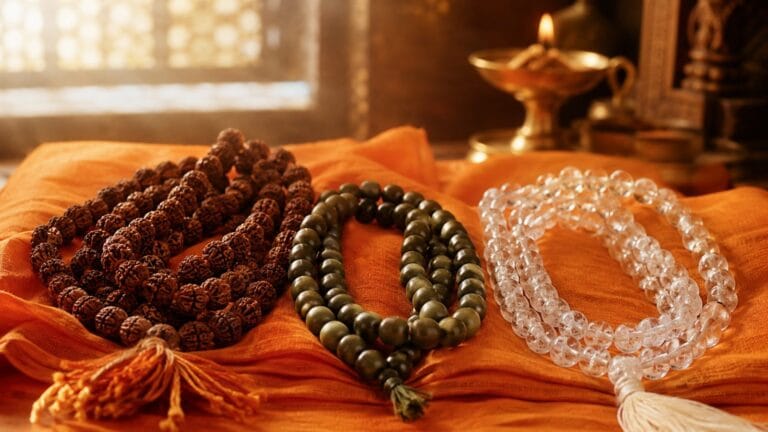
For both Ram Naam and the Hare Krishna maha-mantra, the traditional mala is tulsi. Both Krishna and Rama belong to the Vishnu family, and tulsi is Vishnu-priya – the plant considered the most sacred to Vishnu. There is a natural alignment when you use a tulsi mala for these names.
One mala is 108 repetitions. The 2024 EEG study used exactly 108 reps and found measurable brainwave shifts. The minimum daily practice is usually one mala; serious practitioners do 10 (1080 reps). If keeping count on a mala feels awkward at first, or you are chanting while commuting or walking, a jap counter like Devta App lets you tap for each repetition so your attention stays on the Name rather than the bead position. The goal is for counting to disappear into the background and the Name to fill the foreground.
Krishna or Rama – both names have carried millions of people through their hardest moments. The one that holds your heart is the right one. Begin today.
Can I chant both Hare Krishna and Ram Naam?
Absolutely. The Hare Krishna maha-mantra itself contains Ram Naam within it – Hare Rama Hare Rama, Rama Rama Hare Hare. Many devotees chant both and find they complement each other beautifully. There is no conflict between the two.
Which mantra is better for a beginner?
The Hare Krishna maha-mantra is often suggested for beginners because the Kali-Santarana Upanishad explicitly says it needs no rules, no purity requirement, and no guru initiation – just chant. Ram Naam (especially the simple Ram Ram repeated) is equally accessible. Either is an excellent starting point.
What mala should I use for Hare Krishna or Ram Naam?
Tulsi mala is ideal for both. For Ram Naam, tulsi mala is specifically recommended in the Vaishnava tradition. For Hare Krishna jap, ISKCON devotees traditionally use tulsi mala as well. Both Krishna and Rama belong to the Vishnu family, and tulsi is Vishnu-priya.