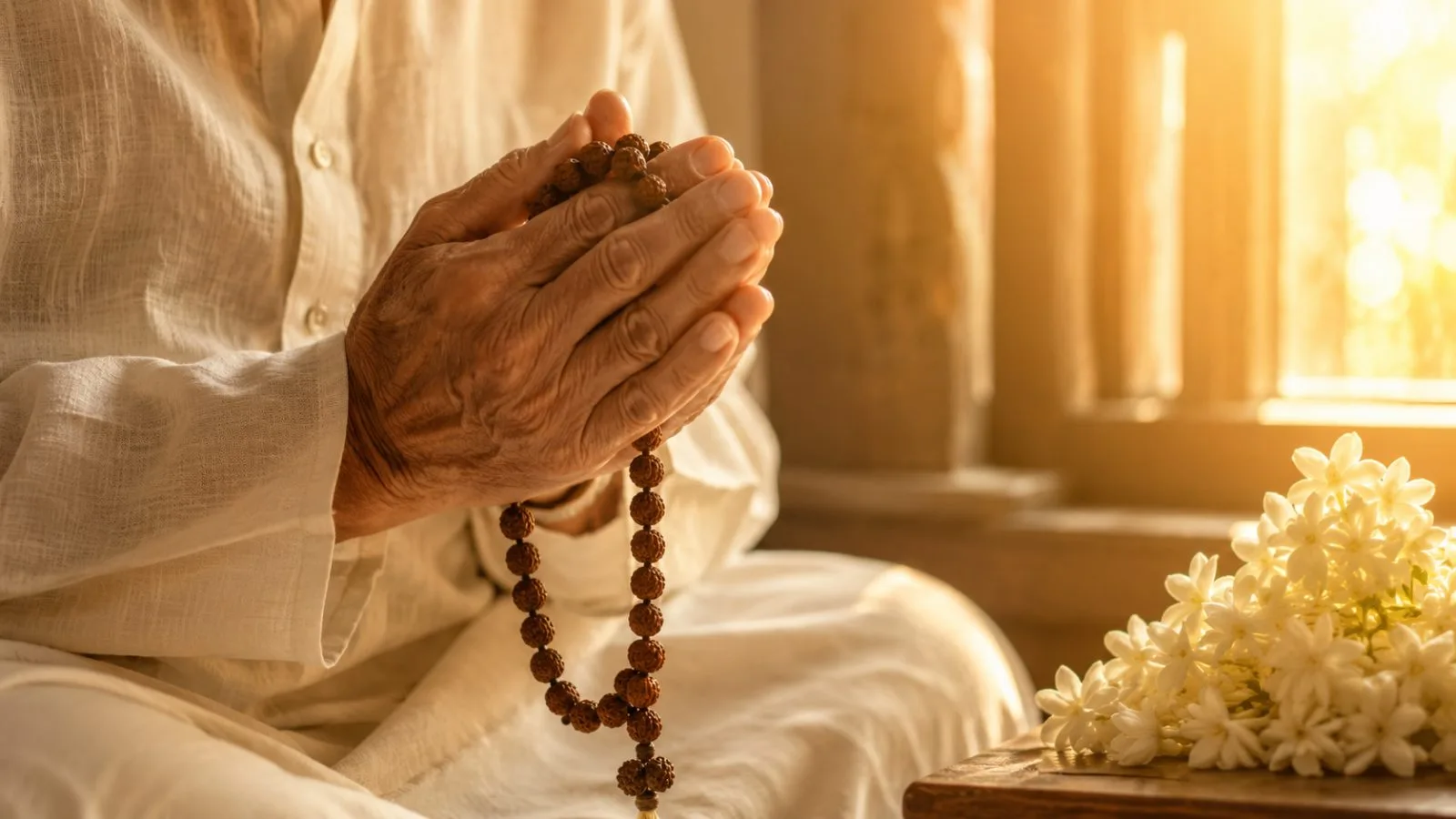
What to Chant When Someone Dies: Naam Jap in Grief
The hours after a death are unlike any other. The phone calls, the arrangements, the wave of people arriving – and underneath all of it, a question nobody says out loud: what do I do with this grief? For Hindu families, the instinct is to pray. But the moment you walk toward the puja shelf, something stops you. The rituals have paused. The lamp is unlit. So what now?
This guide is for that exact moment. What can you chant when someone dies? What pauses during sutak and what never does? How do you hold yourself together through 13 days of mourning when the usual anchors of daily worship are set aside? The answer the tradition gives is both simple and profound: the rituals pause, but the Name does not.
What Is Sutak – and What Actually Pauses
Sutak (called patak in some regions) refers to the traditional Hindu mourning period observed after a death in the family. The exact duration and rules vary considerably by region, caste community, and family lineage – typically 11 or 13 days for the death of a close relative, with some communities observing shorter or longer periods. Your family pandit or a senior elder in your tradition is the right person to confirm the specifics for your situation.
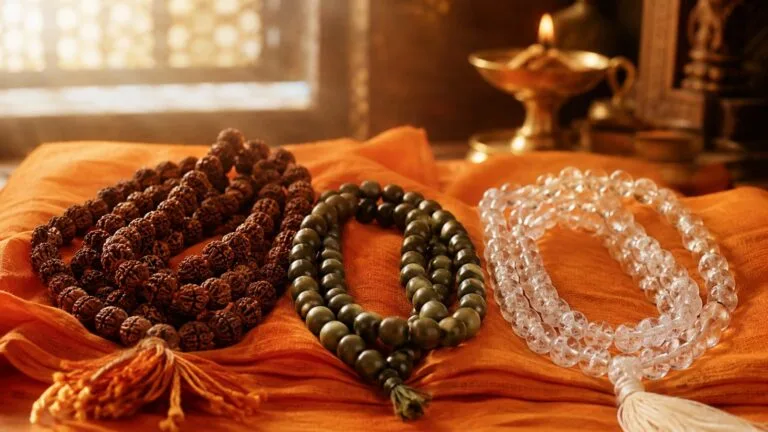
What traditionally pauses during sutak: the formal rituals of puja. This means not lighting the lamp at the household shrine, not performing aarti, not touching the deity idol or mala for worship purposes. The reasoning is about the family being in a state of collective mourning – a time set apart from normal sacred routine, dedicated to accompanying the soul of the departed through prayers and rites specific to that passage.
What does not pause: the mind’s relationship with God. The internal, silent act of remembering the Lord’s name – naam smaran – has no sutak. It belongs to no ritual format. It needs no lamp, no shrine, no clean hands, no specific time. It is simply the heart turning toward God. And that, the tradition is clear, is always open.
The Name That Cannot Be Silenced
The Kali-Santarana Upanishad, the earliest textual source for the Hare Krishna maha-mantra, carries a remarkable instruction: the 16 names of the Lord are to be chanted always – “pure or impure, in any state.” This is not a minor caveat. It is the central claim. The Name is not a ritual. It is a relationship. And relationships do not pause for mourning periods.
Swami Sivananda of the Divine Life Society wrote that of the four types of japa – loud (Vaikhari), whispered (Upamshu), written (Likhita), and mental (Manasika) – the mental form is held as most powerful. And it is the most resilient. When grief collapses concentration, when tears make speaking impossible, when a room full of mourners makes formal chanting feel out of place, the mind can still hold a name. One word. Ram. Krishna. Shiva. Repeated, or simply held.
Many families find that the sutak period, precisely because it strips away all other ritual, becomes the time when naam smaran grows most essential. Nothing to perform, no lamp to light, no aarti to lead – just the Name, repeated quietly in the heart, for the departed and for yourself.
What to Chant – A Practical Guide
If you are wondering what to actually chant in this time, here is what different traditions offer:
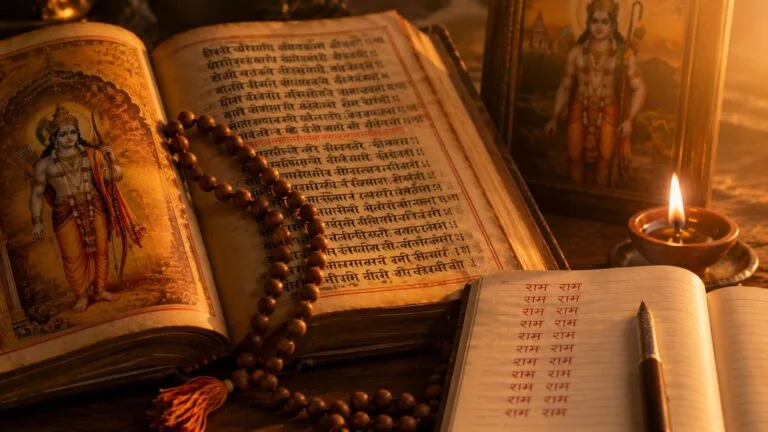
- Ram Naam – “Ram Ram” or “Om Sri Ram Jaya Ram”: The most widely used name for the departed across North India and Vaishnava traditions. Tulsidas writes in the Ramcharitmanas: “Mahamantra joi japat Mahesu, Kasin mukti hetu upadeSu” – the great mantra Shiva himself chants is the same one he whispers to the dying in Kashi as the teaching of liberation. That mantra is Ram Naam. For any family accompanying a death, Ram Naam is the natural and universal anchor.
- Hare Krishna maha-mantra: “Hare Krishna Hare Krishna Krishna Krishna Hare Hare / Hare Rama Hare Rama Rama Rama Hare Hare.” The Kali-Santarana Upanishad explicitly places this mantra in any state, any condition. For Vaishnava families and ISKCON communities, this is central practice around both life and death.
- The departed’s own mantra: If you know what name or mantra the person who died used in their daily jap, chanting that name for them is a deeply personal act. You are continuing their practice on their behalf.
- Gita path: Reading aloud from the Bhagavad Gita – chapters 2, 8, or 15 are traditionally associated with this context – is not a formal puja ritual and is not restricted during sutak. Scripture being heard is always appropriate.
There is no rule that says you must choose only one. Different moments in the mourning period call for different things. A quiet evening alone might be Ram Ram murmured under the breath. A gathering of family might be 15 minutes of Hare Krishna kirtan. A child in the house might need the simple grounding of one name, counted on fingers, with no mala.
When You Cannot Focus – How to Chant in Grief
Grief is not a state that makes concentration easy. The mind loops. The same memories replay. The to-do list of arrangements competes with the need to simply sit with the loss. Trying to complete a full mala of 108 beads in this state can feel impossible – and then the failure to finish adds a small grief to the large one.
Here is what actually works: stop counting, or count very small. In the Bhagavad Gita (10.25), Krishna says “among sacrifices, I am japa-yajna.” He does not say “among completed 108-round sessions.” Any sincere repetition of the Name is japa-yajna. One Ram is still Ram.
Practical approaches for chanting when grief makes focus difficult:
- The breath method: On each exhale, silently say the name of your choice. No count, no mala, no target. Let the Name ride the breath as long as you can hold it.
- The whisper (Upamshu japa): In a quiet moment, whisper the Name barely audibly, for no one but God. This is one of the four classic japa forms and carries its own depth and intimacy.
- Shared family silence: Gather briefly together and let everyone mentally hold the Name without speaking. No one needs to lead or follow. Ten minutes of shared inward naam is a form of collective kirtan that needs no instrument and no trained voice.
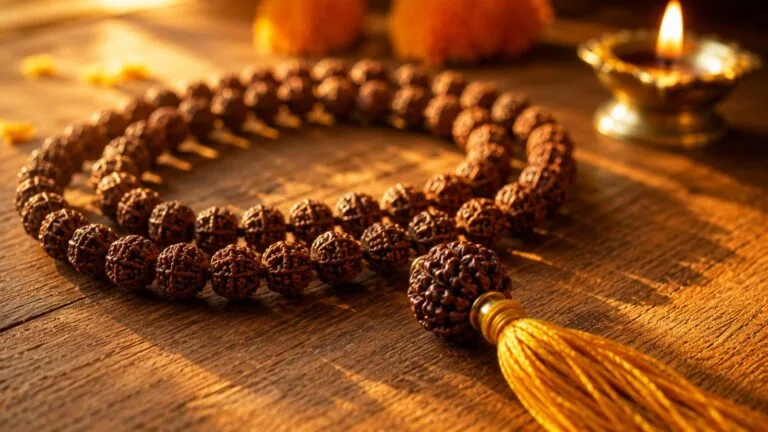
- A tap-counter: If holding a mala feels wrong during sutak – the beads usually being part of formal puja – a simple tap-counter means nothing associated with ritual needs to be touched. Apps like Devta App let you keep a silent count with one tap per repetition, no mala required, no purity ritual, usable in any state.
What the Name Offers in Grief – and What It Does Not
It is worth being honest about what naam jap does and does not do in grief. It does not numb the pain. It does not speed the mourning process. It does not make the loss smaller. Anyone who tells you that chanting will make grief disappear quickly is speaking from a shallow experience of both grief and bhakti.
What the Name does is simpler and more fundamental. It gives the mind a direction when it has nowhere to go. Grief is love that has no one left to give itself to. The Name gives it a destination – in the One who receives everything, always. The tradition’s deepest teaching on this is embedded in the Tarak Mantra belief: what you chant for the departed is not wasted. The Name follows them, as it followed them in life.
If you are supporting a grieving family member, this may be the most practical gift you can offer: sit with them in shared silence for a few minutes, both inwardly holding the Name. You need not say anything. The shared presence and shared inward practice carry a comfort that no condolence words can fully replace.
When Formal Puja Resumes
After the sutak period ends – guided by your family tradition, pandit, or senior elder – the formal rituals of puja resume. There is usually a specific rite to mark the return of regular worship at the household shrine. This is not starting over from zero. It is the visible ritual rejoining the invisible continuity of devotion that never actually stopped.
When you return to your regular daily naam jap after this period, you may find that something has shifted in how you understand the practice. The experience of having held the Name through the hardest days without the usual supports – no lamp, no mala, no shrine, no ritual structure – reveals what naam jap actually is at its core. It is not a ritual. It is a relationship. And relationships, the tradition says without ambiguity, survive everything.
Grief is the weight of love that has nowhere to go. The Name gives it a direction – upward, toward the One who receives it all.

Can I chant during sutak (the 13-day mourning period)?
Yes. Formal puja rituals – lighting the lamp, touching the deity idol or mala – are traditionally paused during sutak. But silent mental naam jap is never restricted. The Kali-Santarana Upanishad says the maha-mantra may be chanted in any state, pure or impure. Consoling the mind with the Name is exactly what this time calls for.
What mantra should I chant for someone who has died?
Ram Naam – Ram Ram or Om Sri Ram Jaya Ram – is the most widely used for the departed, rooted in the belief that Ram Naam is the Tarak Mantra Shiva whispers to the dying in Kashi. For Vaishnava families, the Hare Krishna maha-mantra is equally central. The best choice is whichever name was closest to the departed’s own devotion, or to your own heart.
When can formal puja resume after a death in the family?
Traditional customs vary by region and family lineage – most commonly after 11 or 13 days for a close relative. A pandit or senior family elder can guide the exact timing. The deeper point: silent naam smaran needs no restart – it was never supposed to stop.
Related Reading