Why Do Hanuman Temples Overflow on Tuesdays and Saturdays? Most People Only Know Half the Story
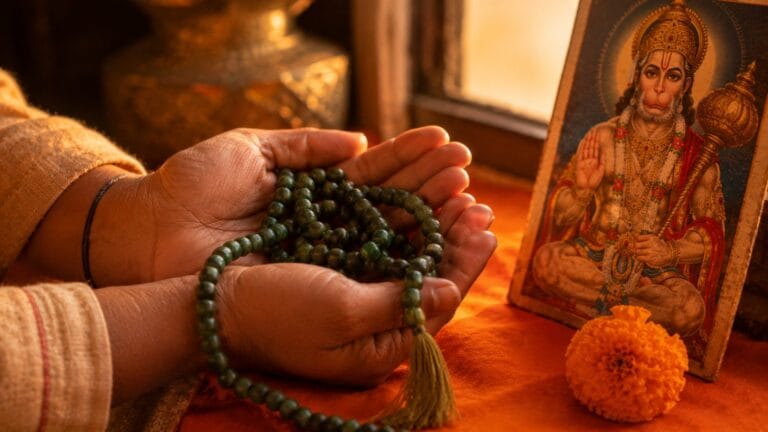
Walk past any Hanuman temple on a Tuesday or Saturday and you’ll see it: queues spilling onto the street, the air thick with sindoor and jasmine, the Hanuman Chalisa rising from a hundred voices at once. The other five days? Calm. This isn’t habit or coincidence – there are two distinct, almost opposite reasons these particular days belong to Hanuman, and most people only know half of the story. Here is the full picture.
The two reasons, in one line each
- Tuesday celebrates Hanuman’s birth and his strength – the day of Mangal (Mars), the planet of courage.
- Saturday seeks his protection – the day of Shani (Saturn), whose hardships Hanuman alone can soften.
One day you go to Hanuman for strength. The other day you go to him for shelter. That difference is the whole story – so let’s tell it properly.
Tuesday: the day of his birth and his power
By the most widely-followed tradition, Hanuman was born on a Tuesday – in the month of Chaitra, on a full-moon day. The day itself, Mangalwar, is ruled by Mangal (Mars): the planet of energy, valour, discipline and victory over enemies.
The match is almost poetic. Hanuman is fearless strength turned entirely toward devotion – the one who leapt across an ocean, carried a mountain, and walked into Lanka alone. So when a devotee is wrestling with fear, weakness, enemies, court cases or debt, tradition sends them to Hanuman on a Tuesday, to borrow a little of that Mars-fire courage.
What to chant on Tuesday
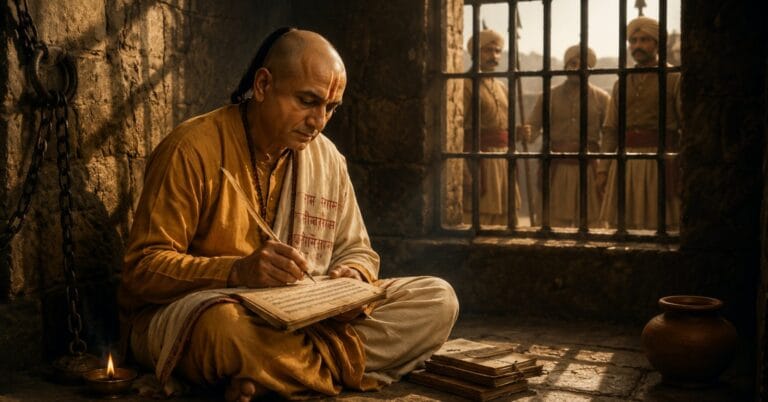
Beyond the Hanuman Chalisa (whose prison-cell origin story is worth knowing), Tuesday is the classic day for the Bajrang Baan – a fiercer, more urgent prayer for protection and courage. A simple, powerful seed mantra many keep on their lips:
ॐ हं हनुमते नमः
Om Han Hanumate Namah
“I bow to Hanuman” – repeated 108 times, ideally on a Tuesday morning.
Saturday: the day his protection matters most
Saturday belongs to Shani (Saturn) – the cosmic judge, the planet of karma, delay, discipline and life’s hardest lessons. So why is it also a Hanuman day? Because of one of the most beloved stories in our tradition.
When Ravana imprisoned the nine planets to bend fate to his will, Shani too was captured and bound. During the burning of Lanka, Hanuman freed him. Overwhelmed with gratitude, Shani gave a promise that devotees still lean on today: anyone who sincerely worships Hanuman will be spared my harshest grip. In another telling, Shani once tried to climb onto Hanuman’s shoulder to influence him; Hanuman simply trapped him underfoot until Shani relented and granted the same boon.
This is why anyone passing through Sade Sati or a heavy Shani period is told: go to Hanuman on Saturday. (Here’s the full story of why Shani himself bows to Hanuman.) Not to fight Saturn – but to ask the one being Saturn himself respects to stand beside you.
What to offer on Saturday
Saturday worship leans toward mustard oil (Shani’s oil) – a diya lit with it, and in many homes a small offering of oil itself. Recite the Hanuman Chalisa, and if you wish, the Shani-friendly verse asking Hanuman to shield you through hard times.
Tuesday vs Saturday – at a glance
Tuesday (Mangalwar) – the day of strength
- Ruling planet: Mangal / Mars
- Why this day: Hanuman’s birth; the day of strength
- You go for: Courage, victory, removing enemies and fear
- Classic recitation: Hanuman Chalisa + Bajrang Baan
- Lamp / offering: Ghee diya, sindoor, laddoo
Saturday (Shanivar) – the day of protection
- Ruling planet: Shani / Saturn
- Why this day: Hanuman freed Shani; the day of protection
- You go for: Relief from Sade Sati and Shani’s hardships
- Classic recitation: Hanuman Chalisa
- Lamp / offering: Mustard-oil diya, sindoor
How to do a simple Hanuman puja at home
- Wake early, bathe, and wear clean clothes – red or orange if you have them.
- Light a diya (ghee on Tuesday, mustard oil on Saturday) before an image of Hanuman.
- Offer sindoor, a fresh garland, and a sweet such as laddoo or jaggery.
- Recite the Hanuman Chalisa – 1, 7, or 11 times, with full attention.
- Sit quietly for a minute at the end. That stillness is the real offering.
Ritual perfection is not the point. Hanuman is famously moved by one thing above all – sincere bhakti. A whispered Chalisa from the heart reaches him faster than an elaborate puja done for show.
Five things most people don’t know
- He is a Chiranjivi. Hanuman is one of the immortals believed to still walk the earth – which is why devotees feel he can respond now, not only in stories.
- Sindoor has a story. Seeing Sita apply sindoor for Rama’s long life, Hanuman covered his entire body in it out of love – which is why he’s offered sindoor to this day.
- The Chalisa was written in prison. Tradition holds that Tulsidas composed the Hanuman Chalisa while jailed, and was miraculously freed – one reason it’s trusted for breaking obstacles.
- Saturn respects him, not fears him. The boon Shani gave wasn’t surrender – it was respect. That’s a gentler, truer reading than “Hanuman defeats Saturn.”
- He’s the bridge to Rama. In the Ramayana, Hanuman is the one who carries devotees to Rama. Worshipping him is, in spirit, worshipping Rama.
Watch: a moment of Hanuman darshan
View this reel on Instagram
Don’t wait for Tuesday – do darshan today
You don’t need a temple or a special day to sit with Hanuman. With the free Devta App you can do daily darshan, keep a live Hanuman Chalisa jaap count, and build a devotion streak that carries you from one Tuesday to the next. 👉 Download the Devta App and start your free daily darshan.

Frequently asked questions
Is Tuesday or Saturday better for Hanuman puja?
Neither is “better” – they’re for different needs. Go on Tuesday for courage, strength and victory over difficulties; go on Saturday for protection and relief during a hard Shani phase. Many devotees observe both.
Why is mustard oil used on Saturday?
Mustard oil is associated with Shani (Saturn), who rules Saturday. Lighting a mustard-oil diya before Hanuman links the two – asking Hanuman’s protection precisely on Saturn’s day.
Can I worship Hanuman every day?
Absolutely. Daily remembrance is encouraged and many do exactly that. Tuesday and Saturday simply carry special significance – but sincere devotion on any day is always welcomed.
How many times should I read the Hanuman Chalisa?
Once daily is a beautiful habit. On Tuesdays and Saturdays many recite it 7 or 11 times. Consistency matters far more than the count – a free jaap counter in the Devta App makes it easy to keep track.
Related Reading